
Rugged terrain and medieval towns make up much of Wales’ landscape, but whether you’re a visitor to the country or a local, you’re likely to have seen or visited a castle on your travels. Known as ‘land of the castles’, Wales has more castles per square mile than any other country in Europe. Throughout the centuries, castles have risen and fallen, and there is thought to be 427 of them remaining in various forms. Here in the north of the country, you’ll find some of the most impressive examples of medieval castles in the country, which is why on any visit, it’s definitely worth exploring the spectacular castles of North Wales.
Whether your exploring the towns of North Wales, the mountain landscapes of Eryri (Snowdonia) or the wild coastline of North West Wales, it’s likely you’ll stumble upon a castle or castle ruin during your journey. Some are magnificent dominating fortresses, while others are little more than piles of stone, but they all have a story and an integral part in the history of Wales. I’ve had the opportunity to explore many of North Wales’ castles and here are some of the best.

King Edward I’s castles of North Wales
The most imposing castles of North Wales come from the era of Kind Edward I, who in the late thirteenth century tried and succeeded to bring Wales under English rule. During his reign in this period, he defeated the then Prince of Wales, Llewelyn ap Gruffydd. Having made progress towards North Wales conquering from the east and south, the final and most difficult stronghold was that of Snowdonia, where there was stronger retaliation from the Welsh. On that basis, Edward decided to build an Iron Ring of Castles to surround the area, the main four being Conwy Castle, Caernarfon Castle, Harlech Castle and Beaumaris Castle, all of which now form a UNESCO World Heritage Site. Of all eight castles that King Edward I built, six of them are located in North Wales.
CONWY CASTLE

CONWY CASTLE dominates the small medieval town of the same name on the North Wales coast, sitting on a rocky outcrop overlooking the Conwy Estuary. This magnificent fortress was built between 1283 and 1287, which included the construction of the town walls to create a fortified English settlement. The castle features eight towers with an Inner and Outer Ward. Within the Outer Ward, the walled remains still stand of Great Hall and Chapel.
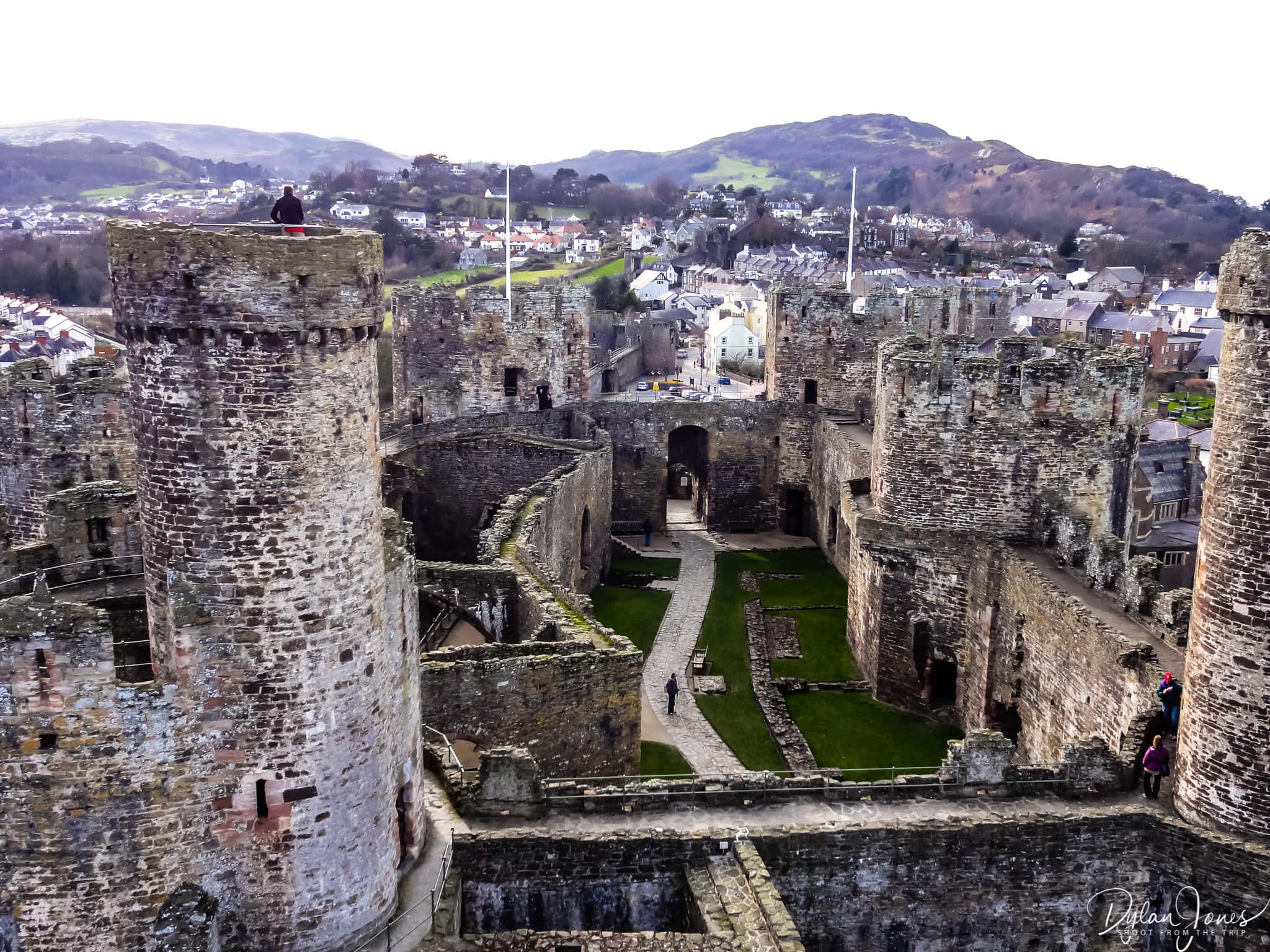
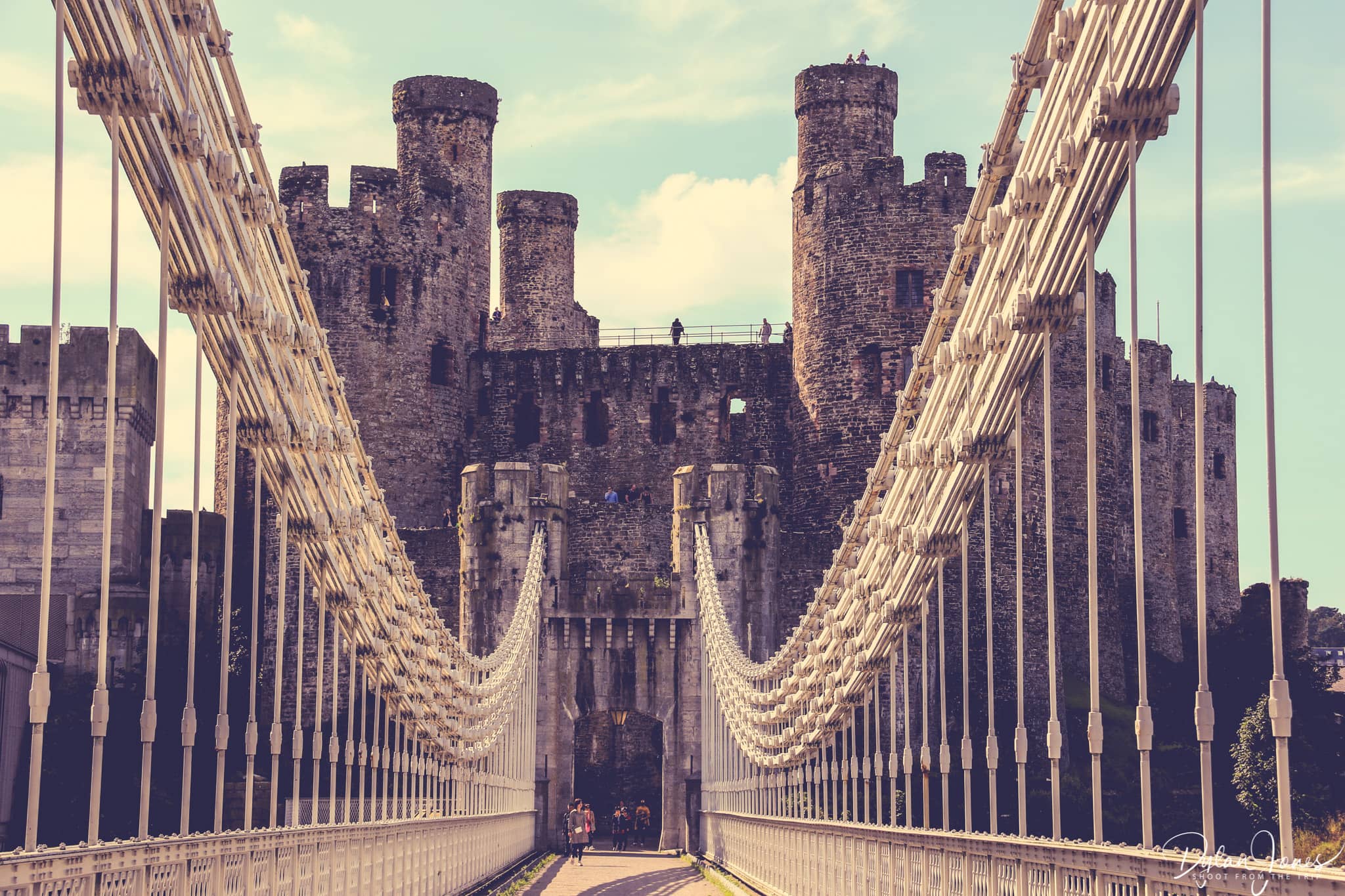
Crossing the bridge from the visitor centre, a sloped pathway leads up to the West Barbican and into the castle itself. Much of the castle is open to explore, including narrow spiral staircases to a number of the towers which provide fantastic views across the town, coastline and the nearby Carneddau Mountains. The East Barbican provides views over the River Conwy and the three bridges that span it in Conwy, including Thomas Telford’s suspension bridge that opened in 1826. The visitor centre features a gift shop and accessible toilets.
Conwy Castle is open to the public year round and operated by CADW. Pre-booked tickets are encouraged to ensure access.
Address: Conwy Castle, Rose Hill St, Conwy LL32 8AY
Book tickets here on the CADW WEBSITE
The setting of Conwy Castle provides the perfect opportunity to explore everything the town has to offer, including taking a walk on the town walls.
Staying in Conwy a little longer? Take a look at more THINGS TO DO IN CONWY, NORTH WALES: A LOCAL’S GUIDE
CAERNARFON CASTLE
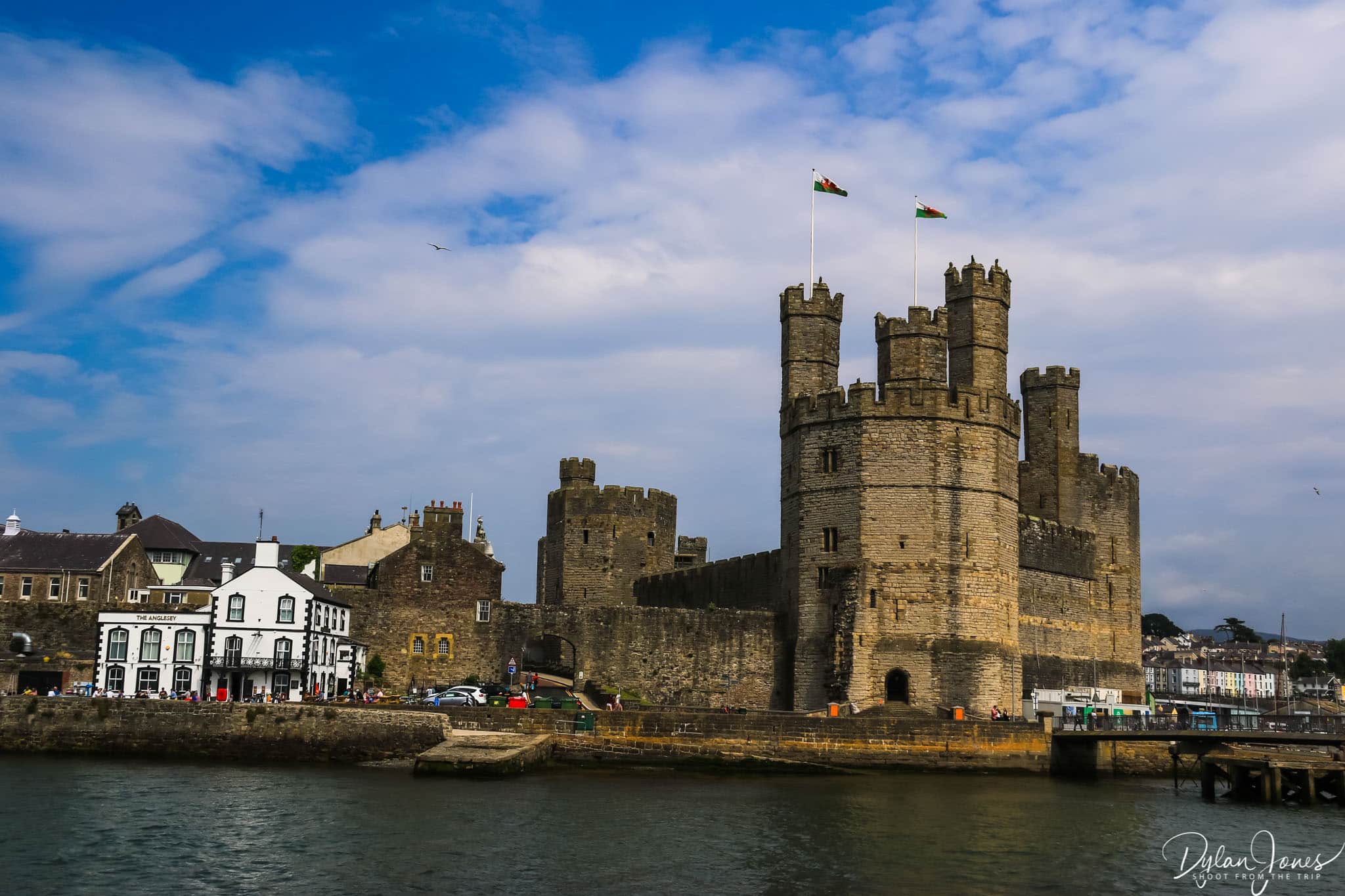
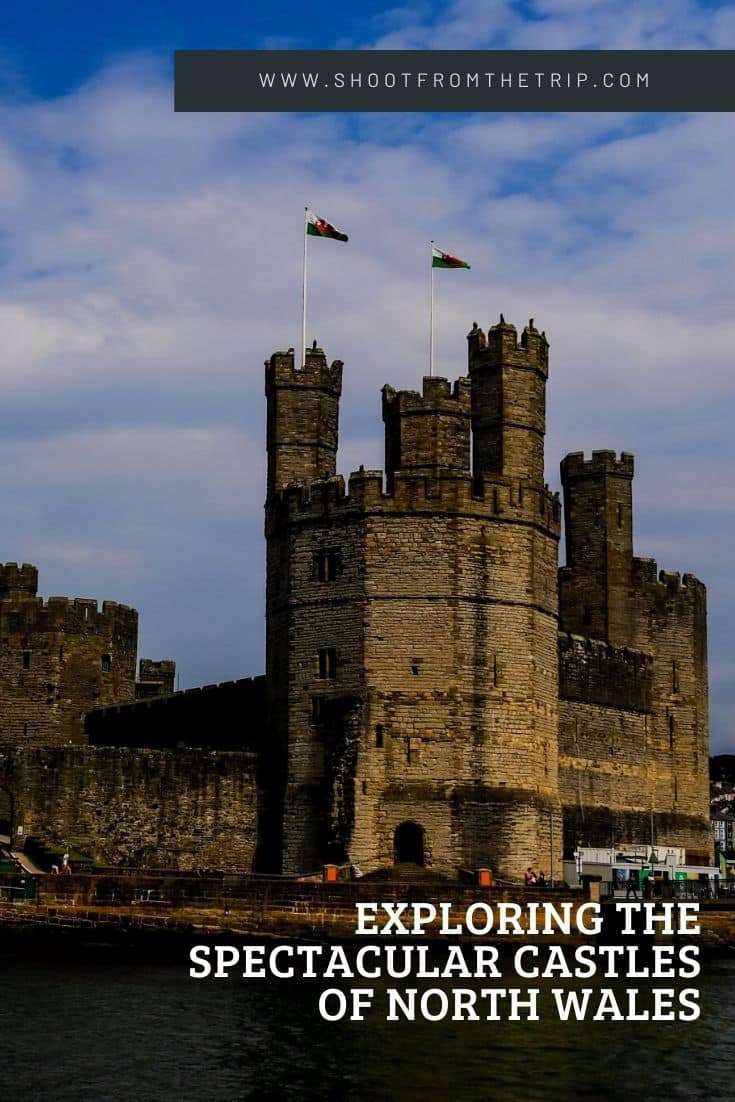
Set in another coastal location, CAERNARFON CASTLE towers above the River Seiont at the point where it meets the Menai Straits. Construction on the castle began in 1283, and took 45 years in two phases. Architecturally, the castle is very different to that of Conwy Castle, with polygonal towers rather than round ones, some of these reaching up to four storeys high. The castle is separated into Upper and Lower Wards with the main entrance to the castle from the town via the imposing King’s Gate.
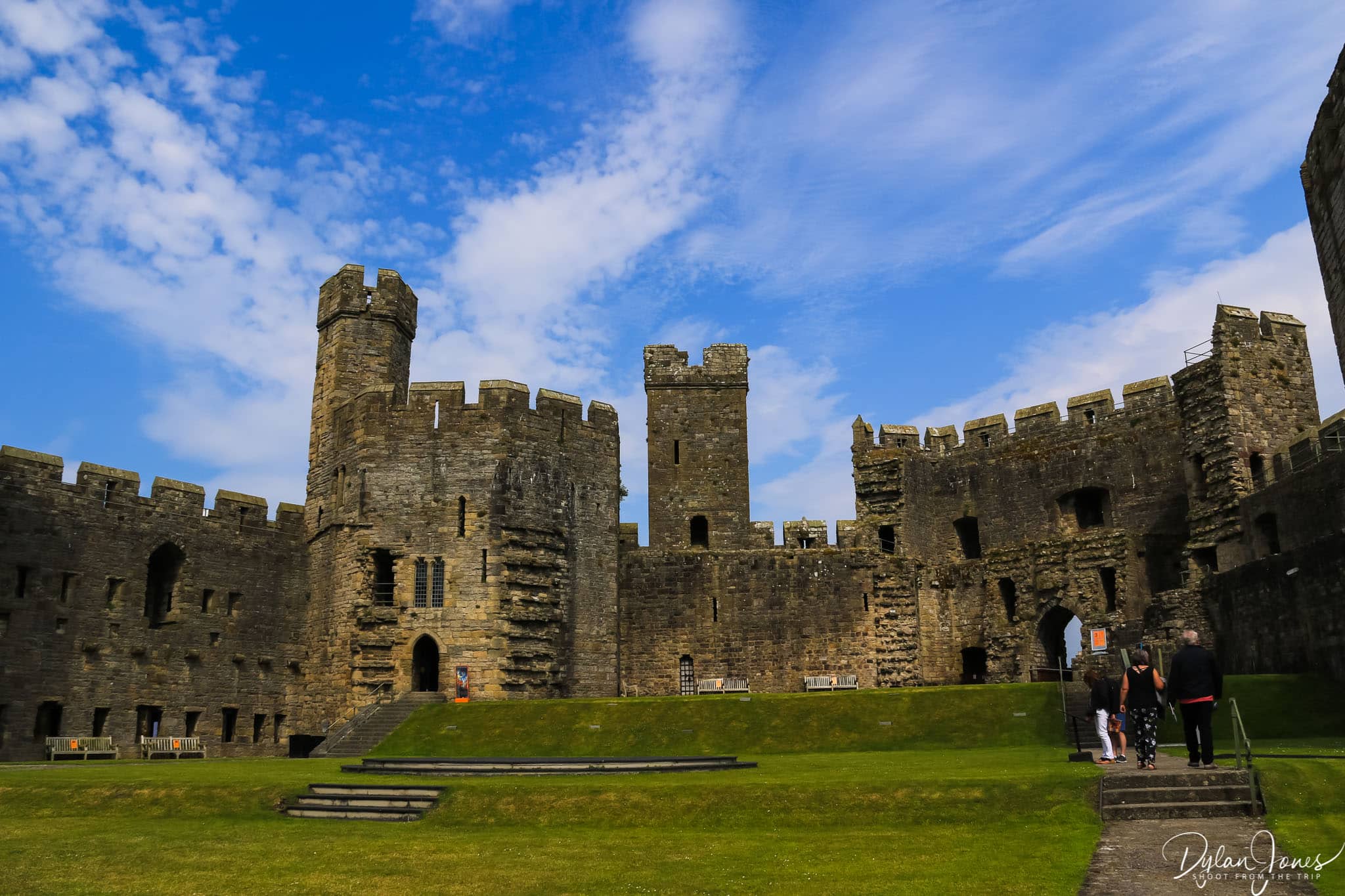
Visiting Caernarfon Castle in 2021, the entrance is at the west end of the fortress via some steps leading into the Eagle Tower. This is the most impressive of the castle’s nine towers, featuring three individual turrets. Heading out into the open area of the Lower Ward, the scale of Caernarfon Castle becomes apparent. A one way system leads through the towers and corridors within the castle walls, with various points of historical interest dotted around. Heading back to the exit via Eagle Tower, there is a museum area to explore and a gift shop.
Note: King’s Gate currently closed for conservation works costing in the region of £4M, which is due to be completed in 2022.
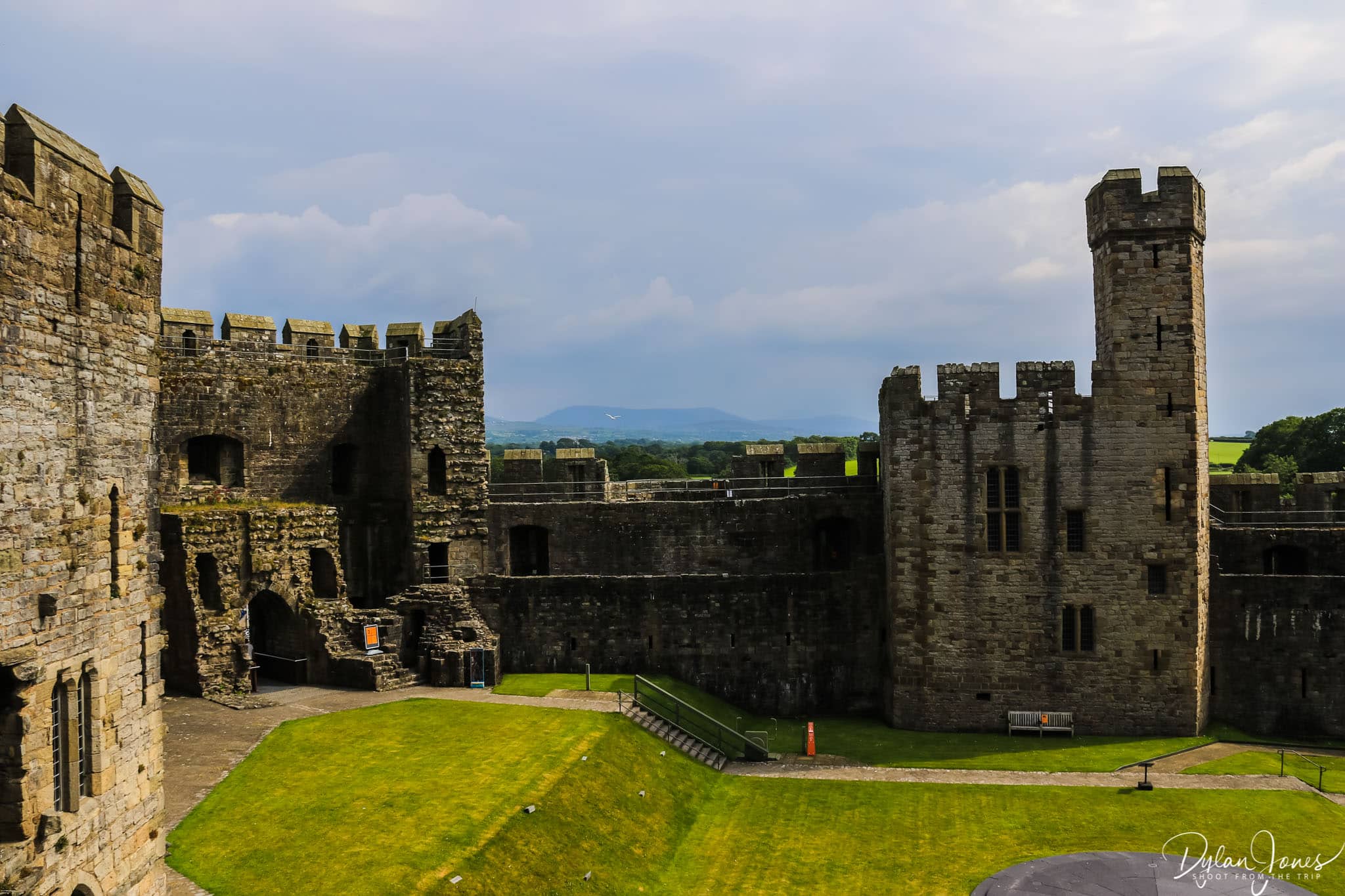
Caernarfon Castle is open to the public year round and operated by CADW. Pre-booked tickets are encouraged to ensure access.
Address: Caernarfon Castle, Castle Ditch, Caernarfon LL55 2AY
Book tickets here on the CADW WEBSITE
HARLECH CASTLE
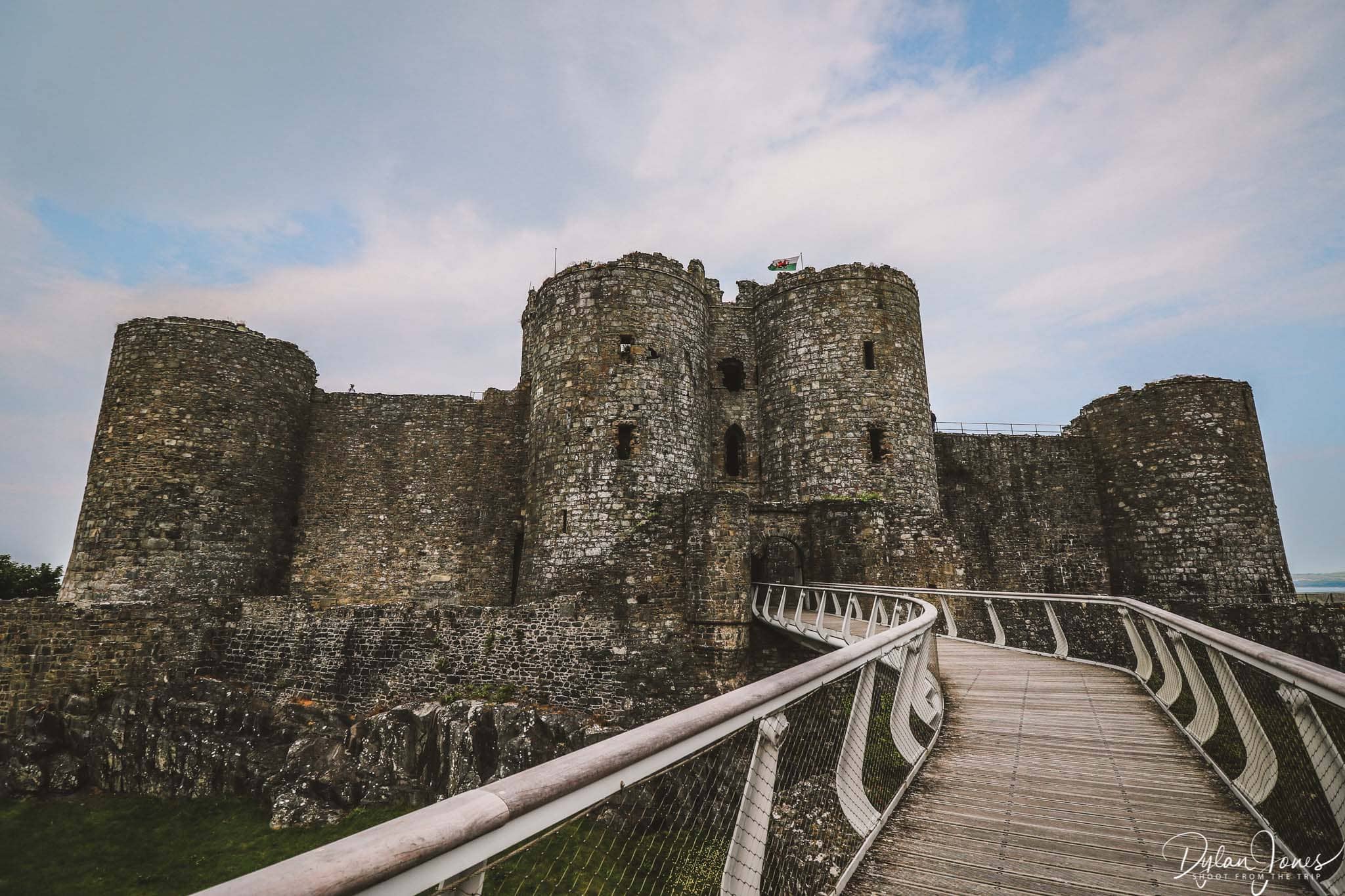
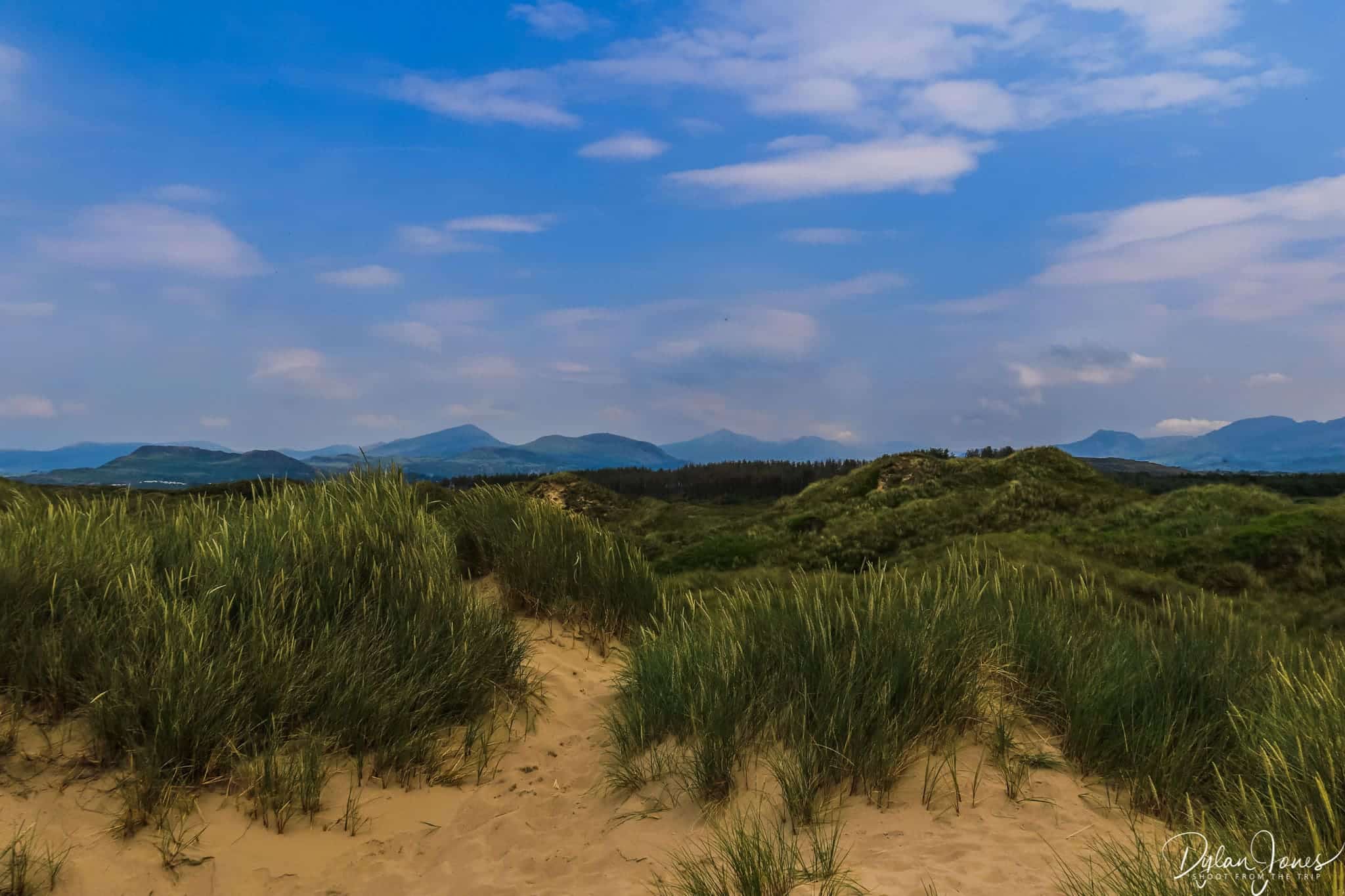
Thanks to its dramatic location, HARLECH CASTLE is one of the most impressive castles of North Wales. At the edge of the small town of Harlech, the castle sits on an outcrop overlooking a large expanse of sand dunes leading to Cardigan Bay. To the north, the impressive peaks of Snowdonia including Yr Wyddfa (Snowdon) herself stand proud. To the west, beyond Cardigan Bay the Llŷn Peninsula stretches out to sea. The views are spectacular.
With a similar timeline to Conwy, Harlech Castle was built between 1283 and 1289 and designed by the same architect, Master James of St. George. Sitting on Castle Rock with a ditch to both the eastern and southern side, the castle features an outer and inner wall with four towers, one to each corner. The gatehouse on the eastern side leads through to the Inner Ward of the castle and also features four smaller towers.
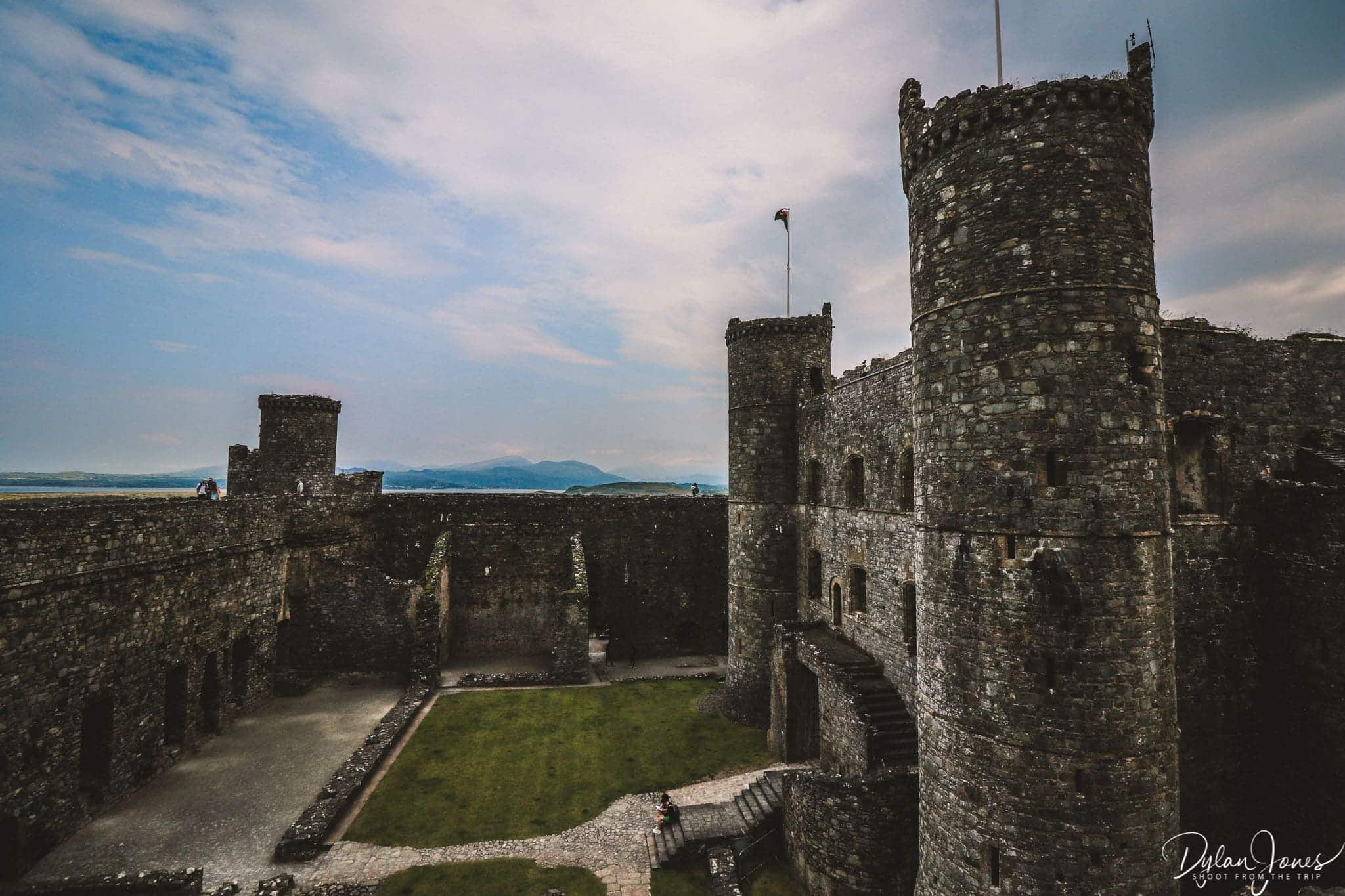
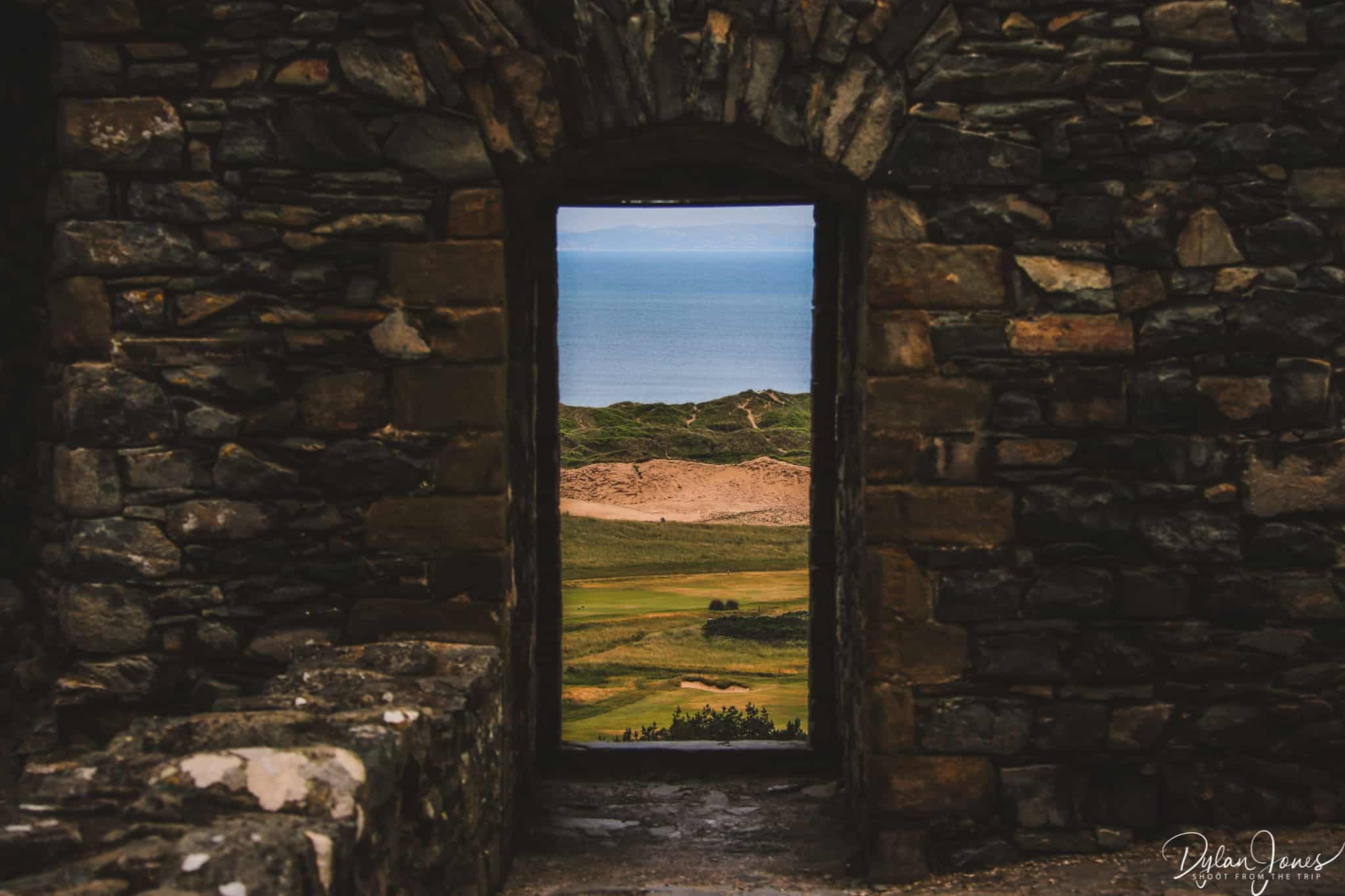
Harlech Castle visitors enter the castle grounds via a visitor centre in a separate building. Access to the gatehouse is via a sweeping footbridge, which offers magnificent views across Snowdonia. Through the gatehouse, visitors are able to explore the grounds of the Inner Ward which offers glimpses of the sand dunes, beach and Llŷn Peninsula through the narrow windows of the western wall. Climbing the towers offers access to pathways along the walls which offer unobstructed views of the surrounding landscape.
The visitor centre features a gift shop, exhibition, accessible toilets and Caffi Castell where you can grab a coffee or a bite to eat, with amazing views of the castle and Eryri.
Harlech Castle is open to the public year round and operated by CADW. Pre-booked tickets are encouraged to ensure access.
Address: Harlech Castle, Harlech, LL46 2YH
Book tickets here on the CADW WEBSITE
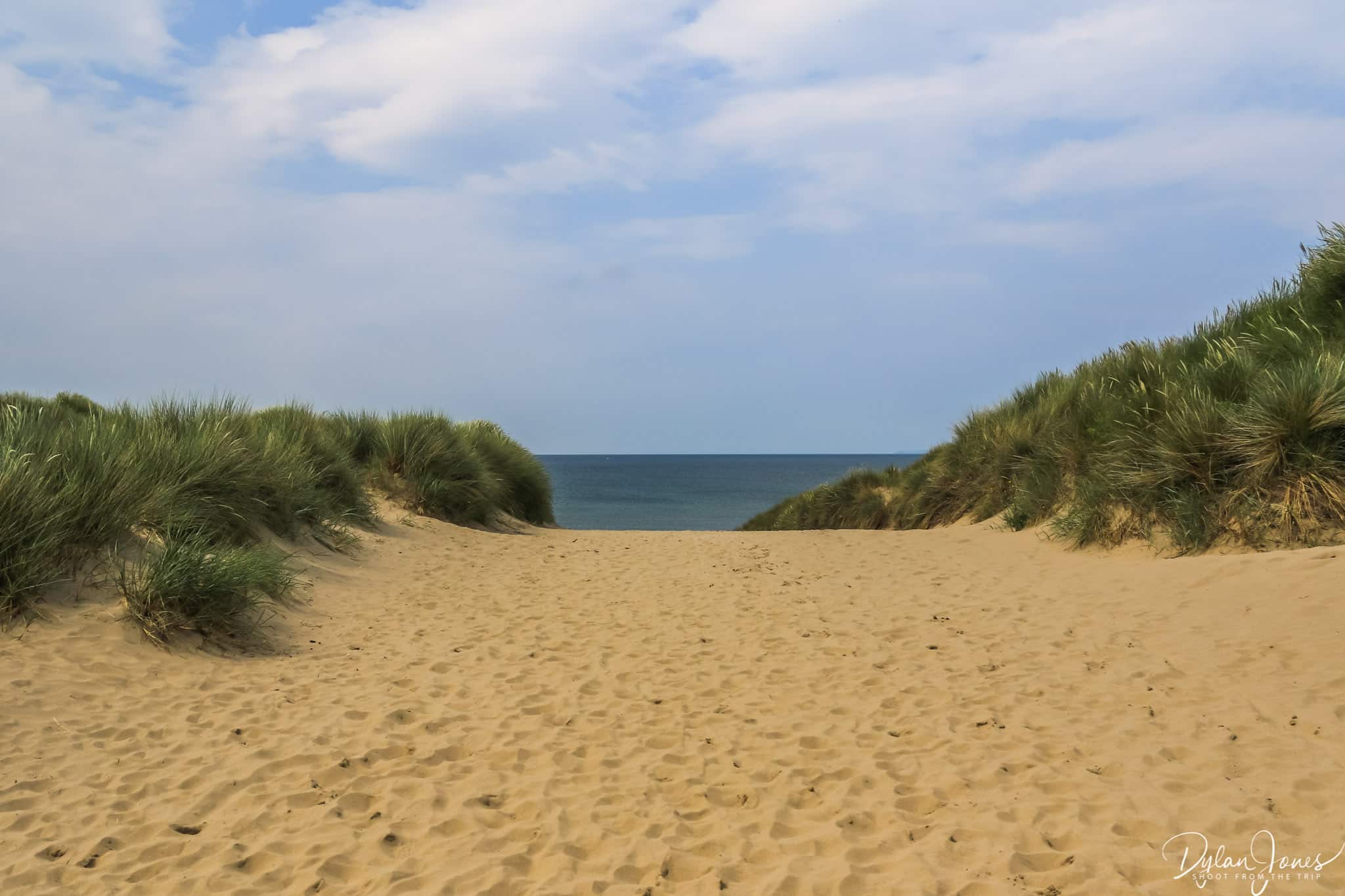
While you’re in Harlech, be sure to explore the quaint shops and cafes of the pretty town centre. Take a walk down Ffordd Pen Llech, one of the steepest streets in the world, and wander across the sand dunes to the stunning golden sand beach. The beach and dunes offer fabulous views back to the castle and the mountains.
BEAUMARIS CASTLE
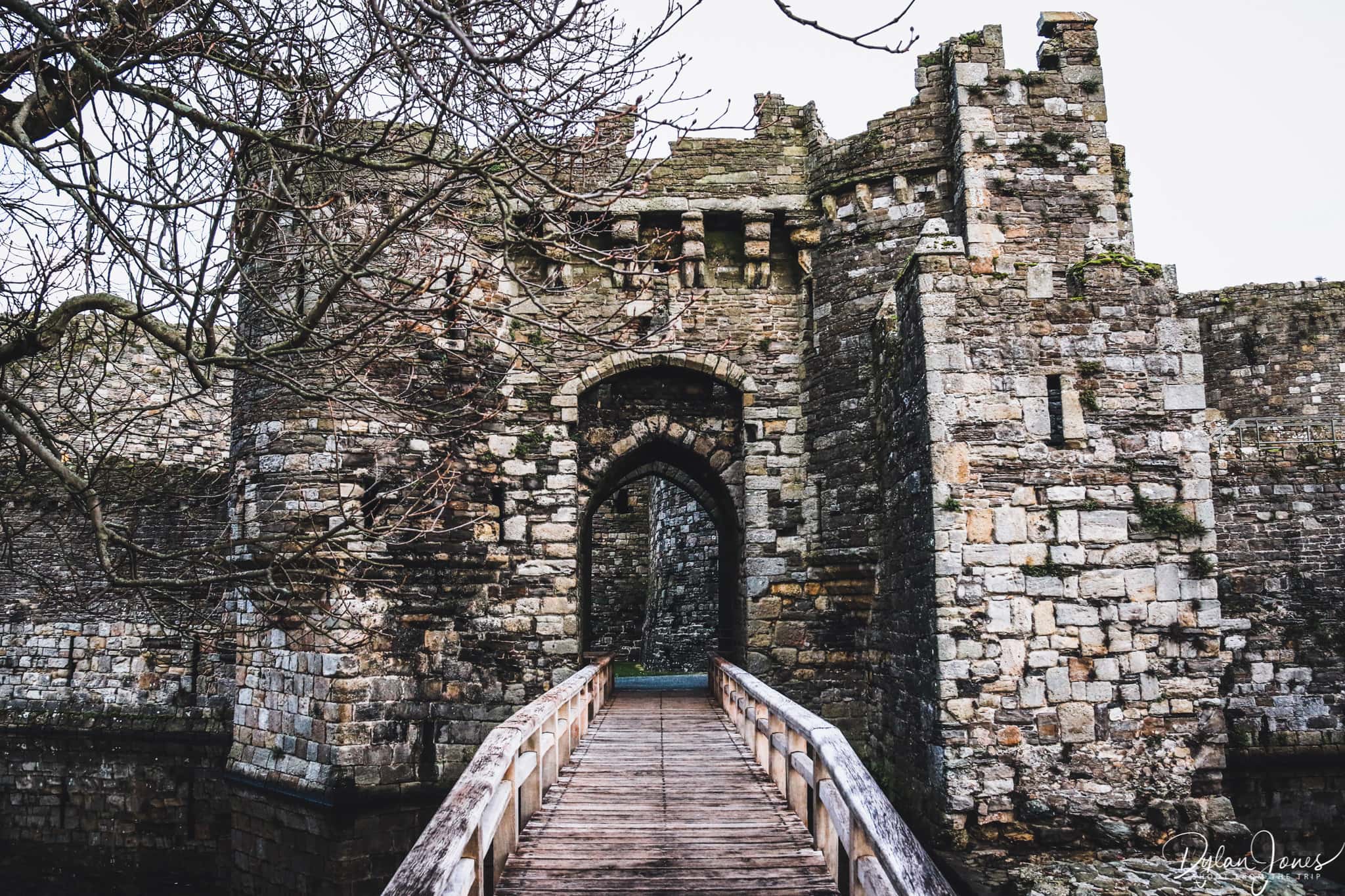
BEAUMARIS CASTLE was the final large castle constructed by King Edward I in Wales, and one that remained incomplete. It’s thought the plans would have been drawn up at a similar time to his other three large fortresses of North Wales, but work didn’t begin on Beaumaris Castle until 1295, some twelve years after construction started on the others.
The symmetrical design of Beaumaris Castle features an outer wall of twelve towers surrounded by a moat, where ships would have been able to access the castle dock directly from the Menai Straits. Between the Outer and Inner Wards of the castle, a gatehouse stands to the north and south, with three additional towers to each side of the castle. Construction slowed and even halted at stages, as Edward focused on an invasion and war with Scotland. The build of Beaumaris Castle came to an end in 1330, leaving the castle incomplete, which is why when compared to the other fortress in his Iron Ring of Castles, Beaumaris Castle doesn’t stand as tall and impressive.
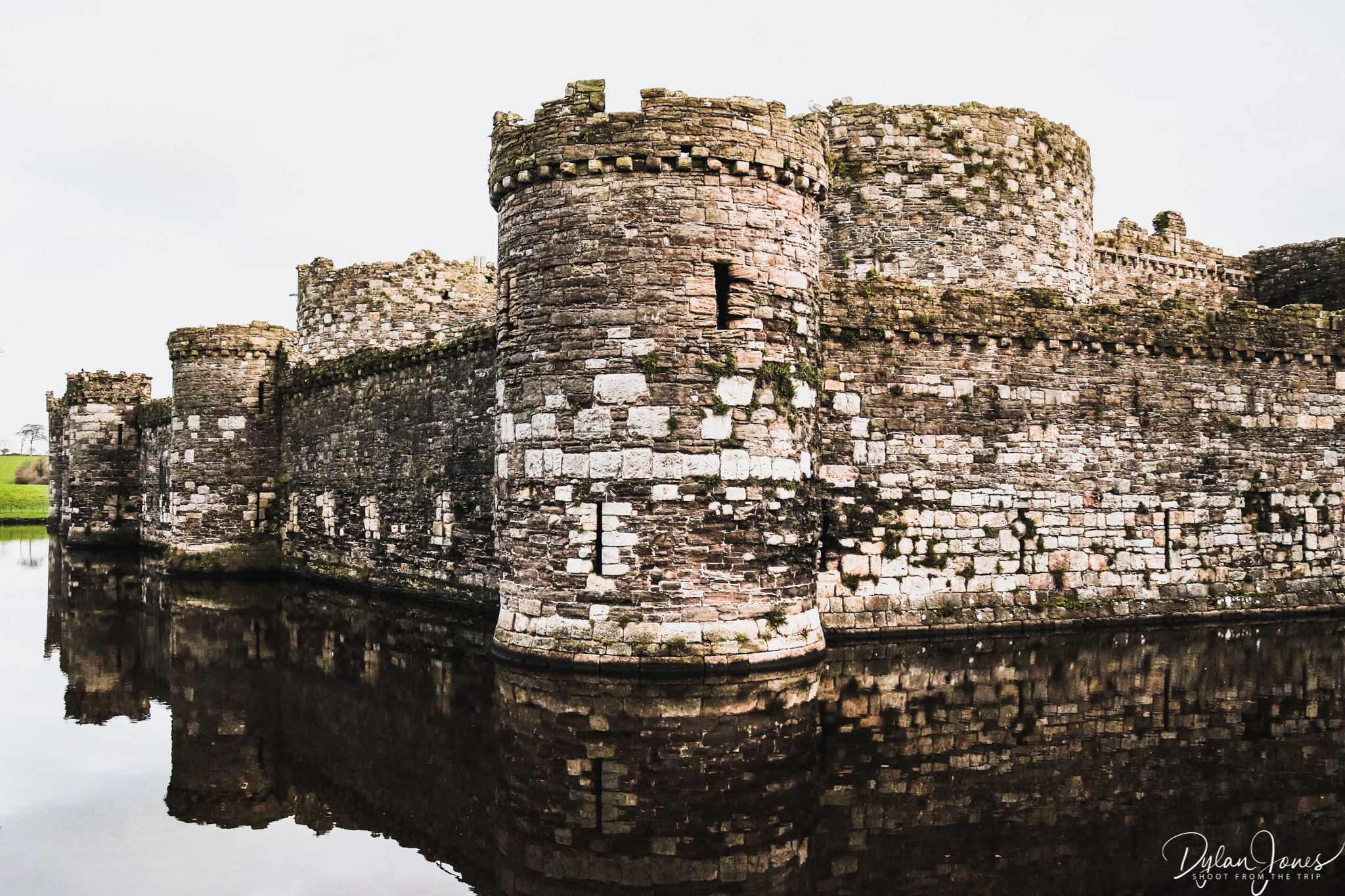
Visitors to Beaumaris Castle enter from the town via a small visitor centre within the castle grounds, which features a small gift shop. A walk around the castle moat leads to the gate of the outer wall, and through to the South Gatehouse. Through the gatehouse and into the Inner Ward, visitors can freely walk around the grounds and there are sections of the inner walls that can be explored, which have spectacular views across to the mountains of Snowdonia.
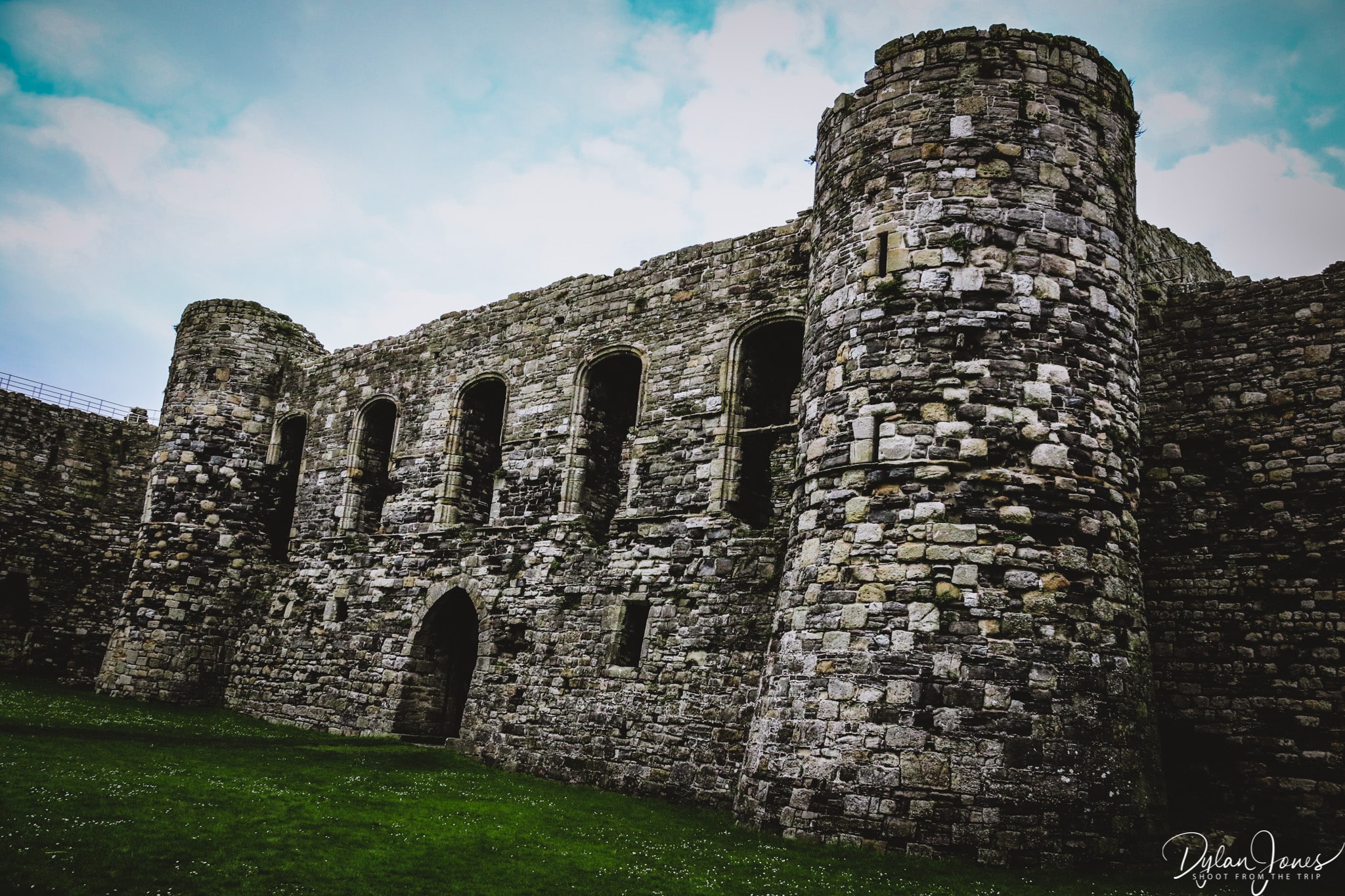
Beaumaris Castle is open to the public year round and operated by CADW. Pre-booked tickets are encouraged to ensure access.
Address: Beaumaris Castle, Castle St, Beaumaris LL58 8AP
Book tickets here on the CADW WEBSITE
Staying longer in Anglesey? The island is fantastic to explore with numerous sandy beaches, coastal walks and lighthouses such as at Penmon Point on the eastern end of the island.
Read about THE BEST PLACES TO VISIT IN ANGLESEY, NORTH WALES

RHUDDLAN CASTLE
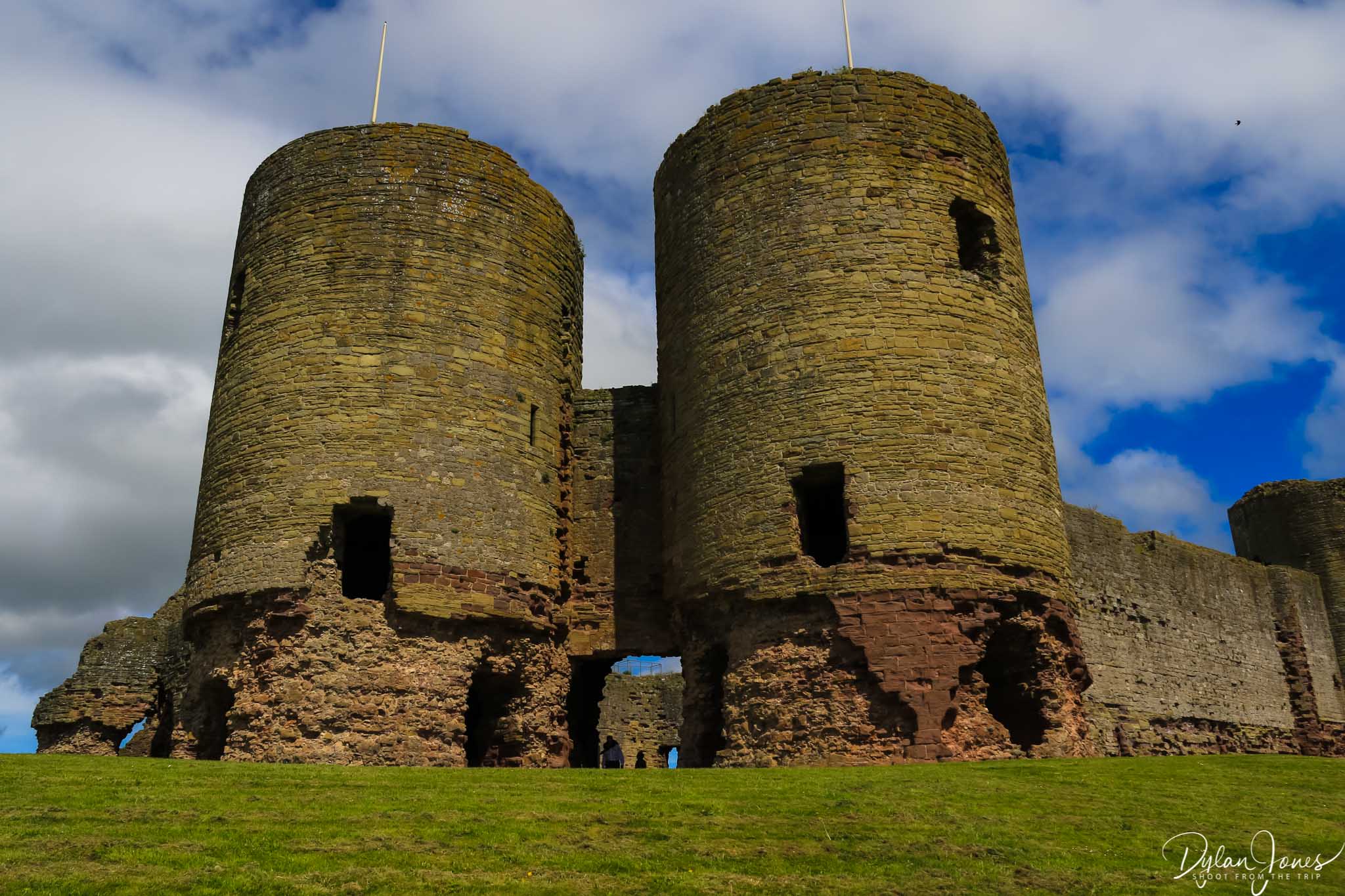
Heading out towards North East Wales, RHUDDLAN CASTLE was one of the first castles to be built by King Edward I in North Wales, along with Flint Castle further east, near the English border. Construction of the castle began in 1277, and it was the King’s temporary residence for a period of time.
In much the same design as Edward’s other castles, Rhuddlan Castle features an outer wall and a larger inner wall. The structure and layout is more diamond shaped with six towers, two of which feature on the South and North Gatehouses. This castle wasn’t coastal and as a result, the River Clwyd was diverted and deepened to provide access by water. A moat also surrounded Rhuddlan Castle.
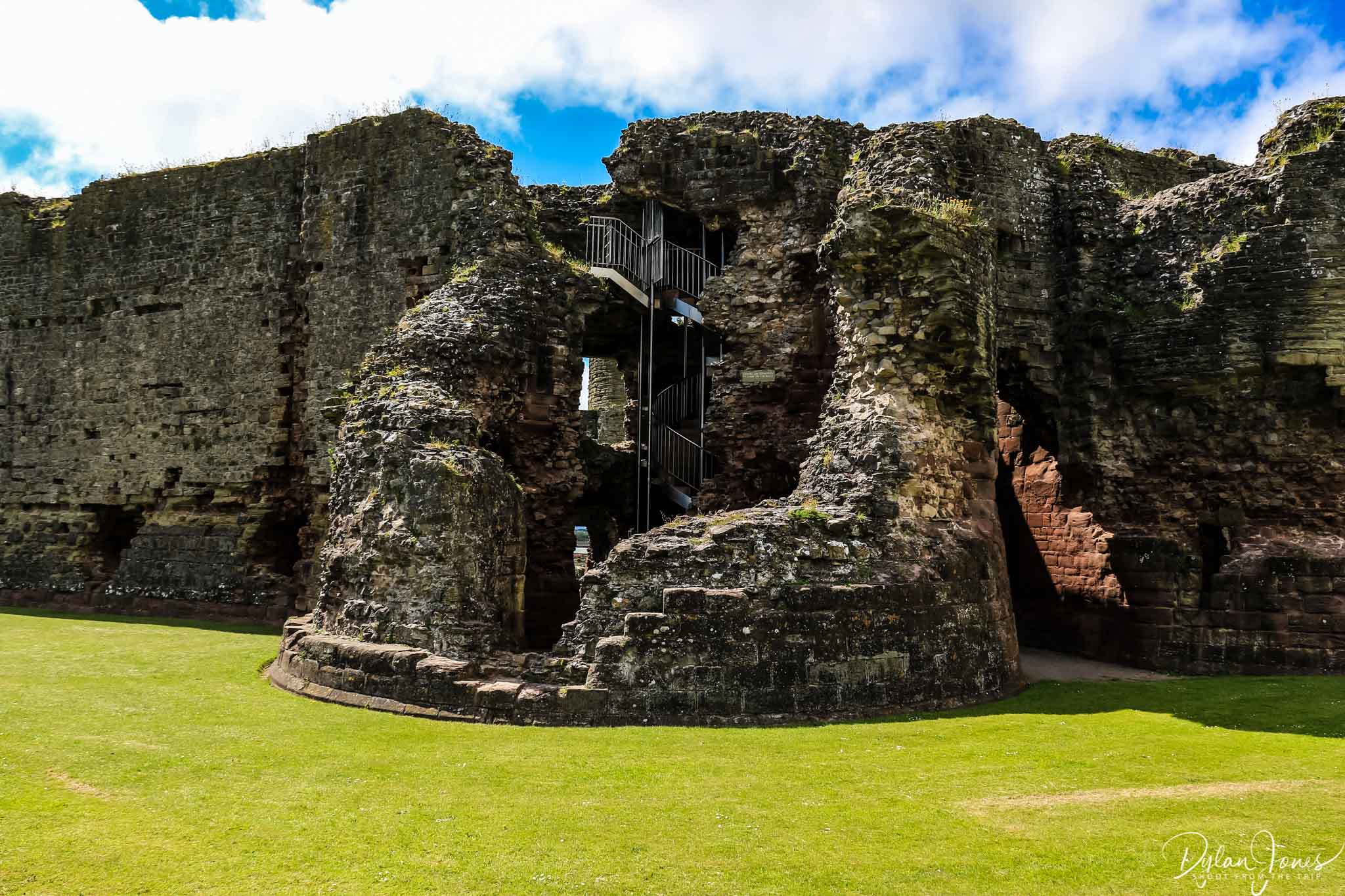
For visitors of Rhuddlan Castle, the visitor centre adjacent to the car park features a small gift shop which also offers refreshments. There are no WC facilities, but public toilets can be found nearby in the town. The castle is accessed via a bridge over the old moat channel, and the Outer and Inner Wards can be explored. There are fantastic views from the castle grounds towards the River Clwyd and the Clwydian Mountain range.
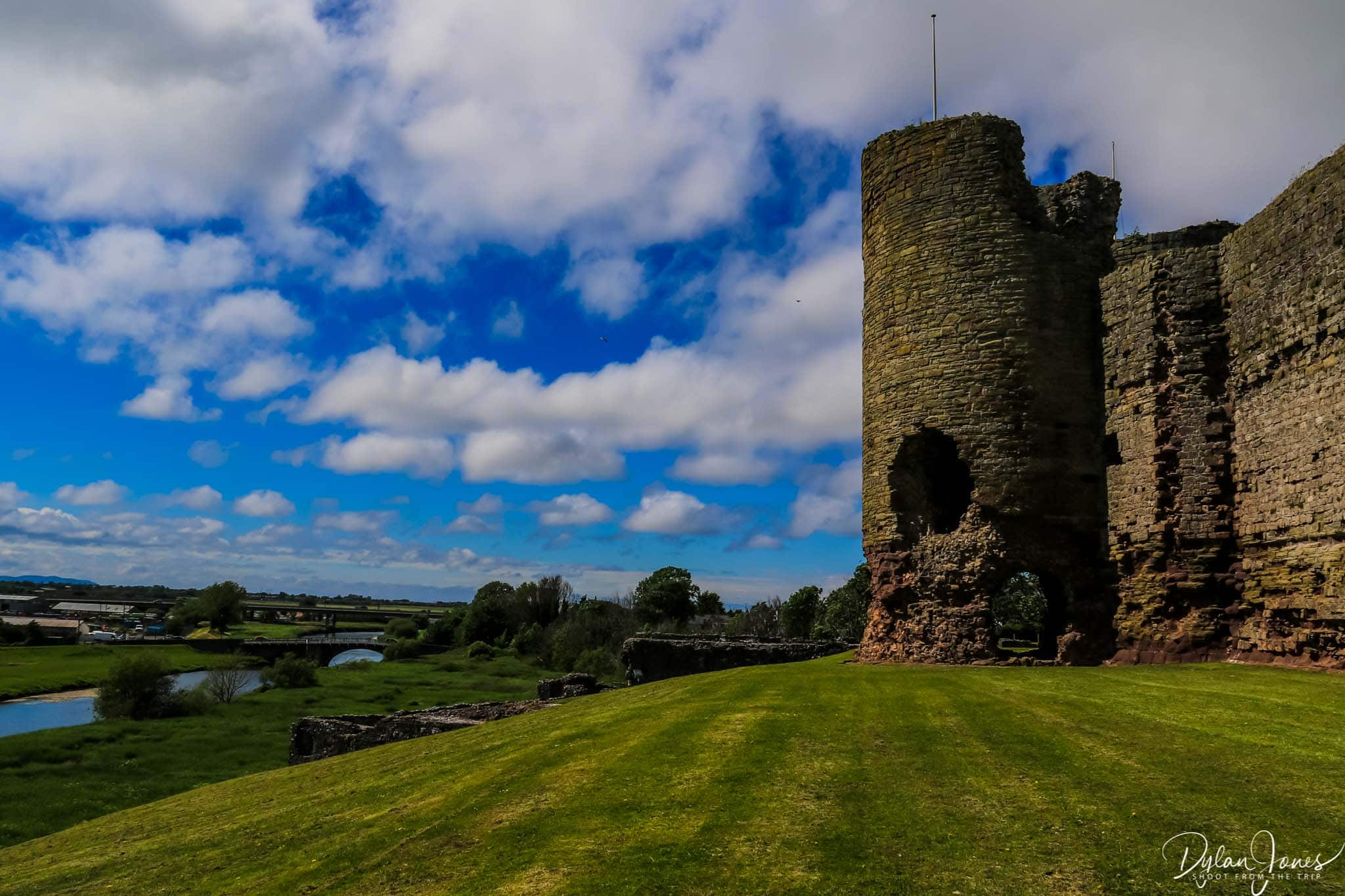
Rhuddlan Castle is open to the public year round and operated by CADW. Pre-booked tickets are encouraged to ensure access.
Address: Rhuddlan Castle, Castle St, Rhuddlan LL18 5AD
Book tickets here on the CADW WEBSITE
Castles of North Wales built by the Welsh Princes
Step back sixty years prior to King Edward I’s invasion of Wales and to the reign of Llewelyn ap Iorwerth, or Llewelyn the Great. During his time in power as Prince of Wales, he built a number of castles on the borders of Gwynedd and in Snowdonia to defend his territory. He was the grandfather of Llewelyn ap Gruffydd, who was later defeated by Edward when many of these castles were taken under his control.
CRICCIETH CASTLE

Sitting atop a rocky mound jutting out to sea, CRICCIETH CASTLE dominates the landscape of this small seaside town on the southern shores of the Llŷn Peninsula. Thought to have been built in the 1230’s, the castle was later modified by Llewelyn ap Gruffydd and furthermore by Kind Edward I. The impressive twin towered Gatehouse and Inner Walls remain, with low level remains of the Outer Walls and Towers.
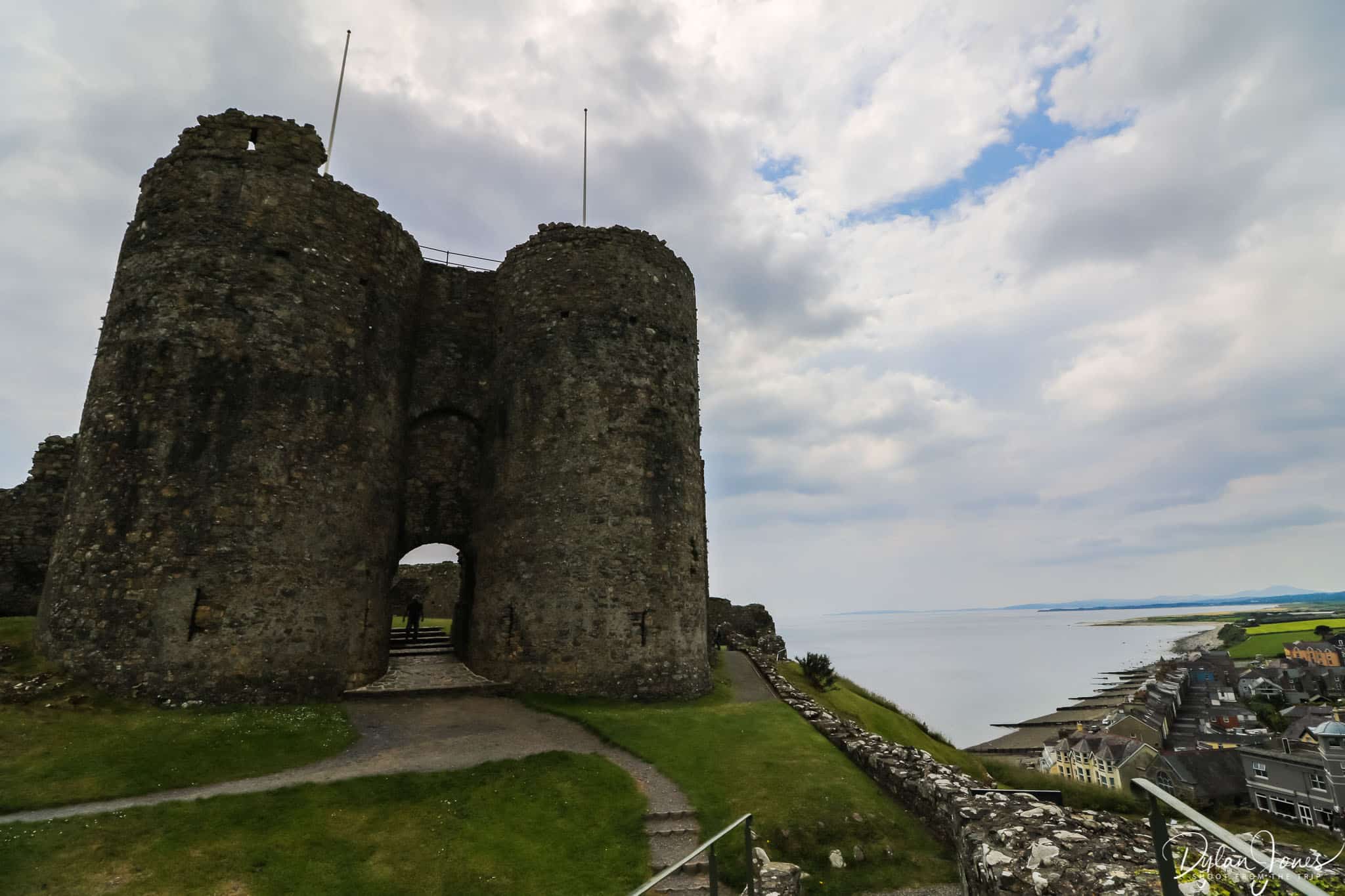
Access to the castle is via a visitor centre at the bottom of the mound. Climbing up towards Criccieth Castle ruins, visitors are rewarded with breath taking views of the surrounding landscape. The coastline and hills of the Llŷn Peninsula, the coast of Cardigan Bay across to Harlech Castle and magnificent Snowdonia views are all available from the elevated position.

Criccieth Castle is open to the public year round and operated by CADW. Pre-booked tickets are encouraged to ensure access.
Address: Criccieth Castle, Castle St, Criccieth LL52 0DP
Book tickets here on the CADW WEBSITE
If spending a little more time in Criccieth, be sure to grab an ice cream from the famed Cadwaladers further down Castle Street. For a meal or drink, head down to the beach and visit Dylan’s Restaurant (not affiliated!) who offer some fabulous dishes in an impressively restored art deco building.

DOLBADARN CASTLE
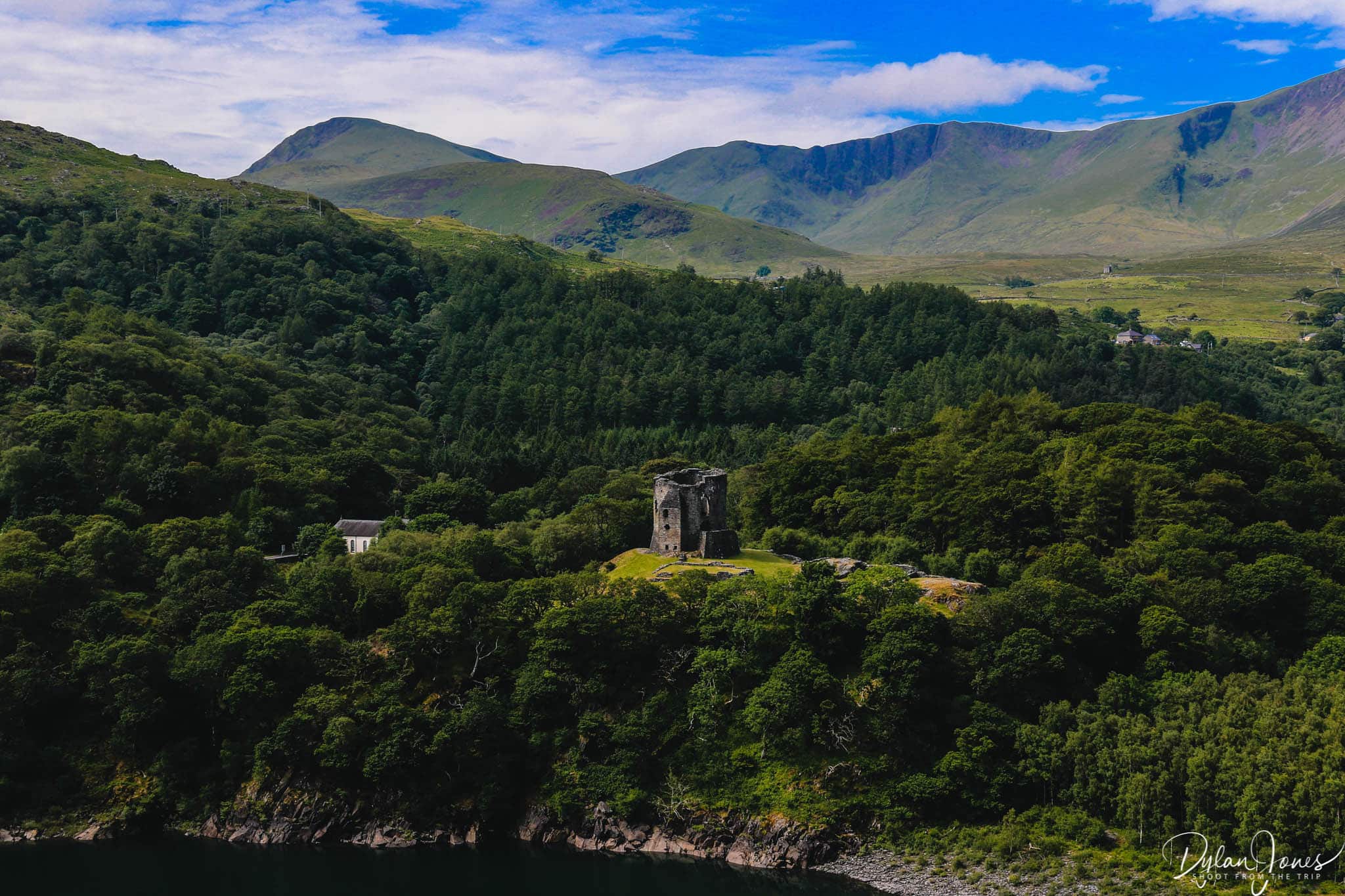
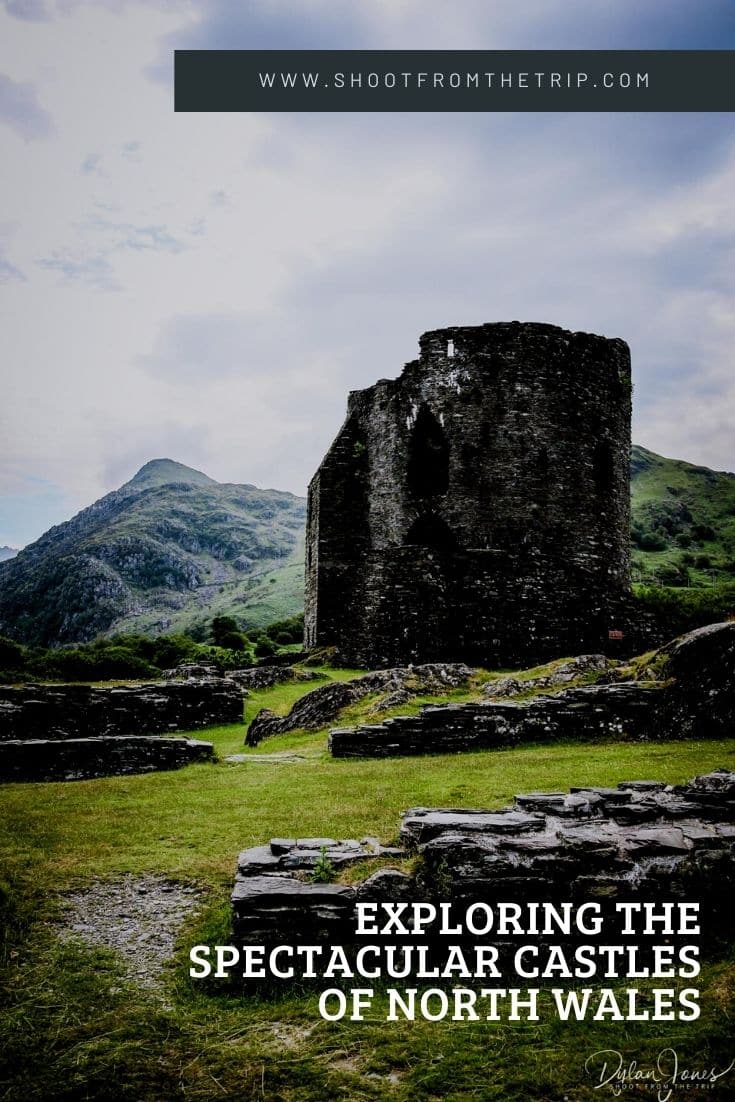
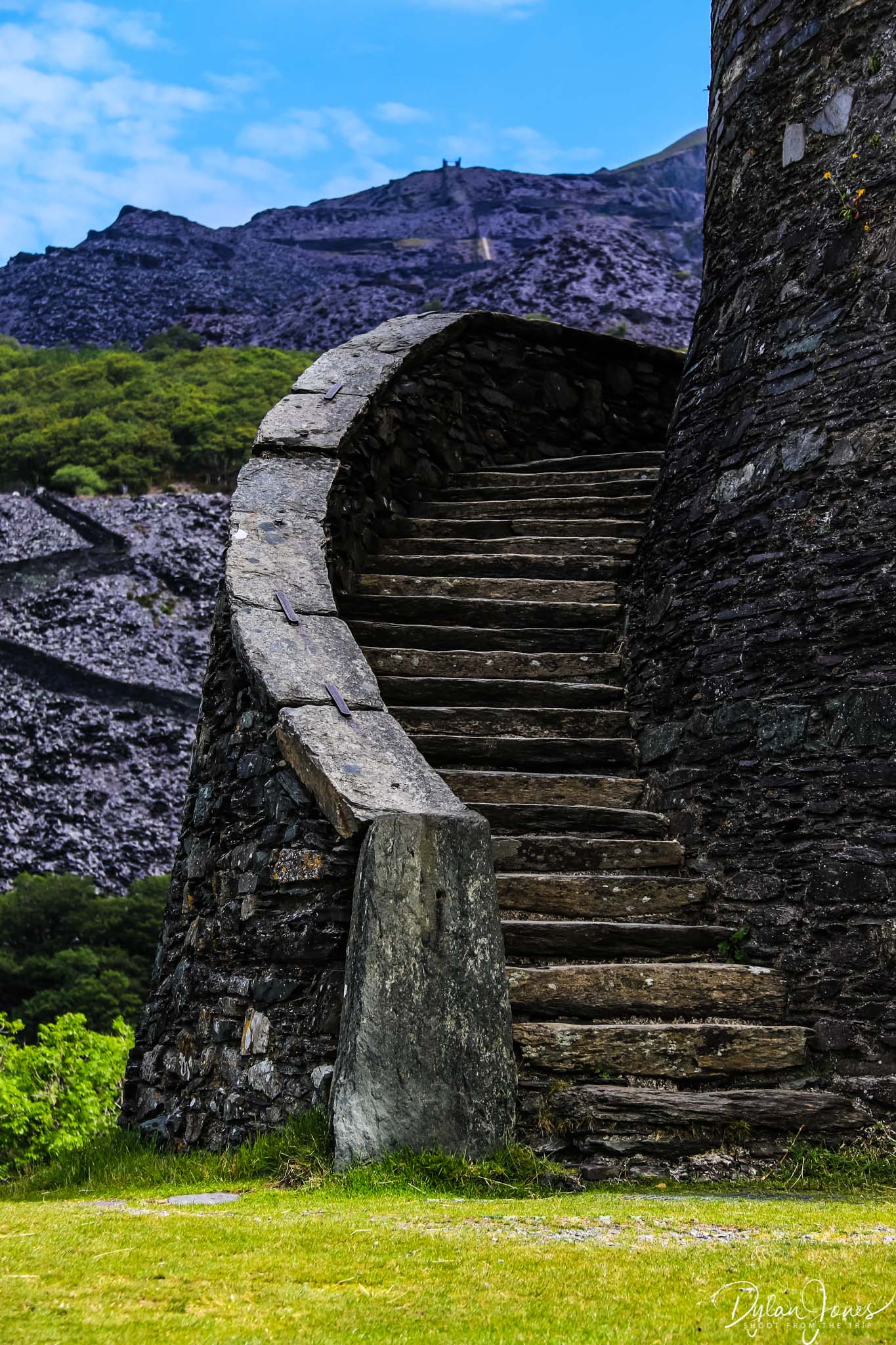
DOLBADARN CASTLE, located in the heart of Snowdonia in Llanberis, has one the most impressive backdrops to any of the castles of North Wales. The castle was thought to be constructed in or around the 1220’s by Llewelyn the Great, with intent to protect the main inland routes in the area such as the Llanberis Pass. The layout of the Outer Walls of the castle can still be seen at low level, but the dominant feature is the impressive round towered keep, which stands atop the hill with a backdrop of Mount Snowdon.
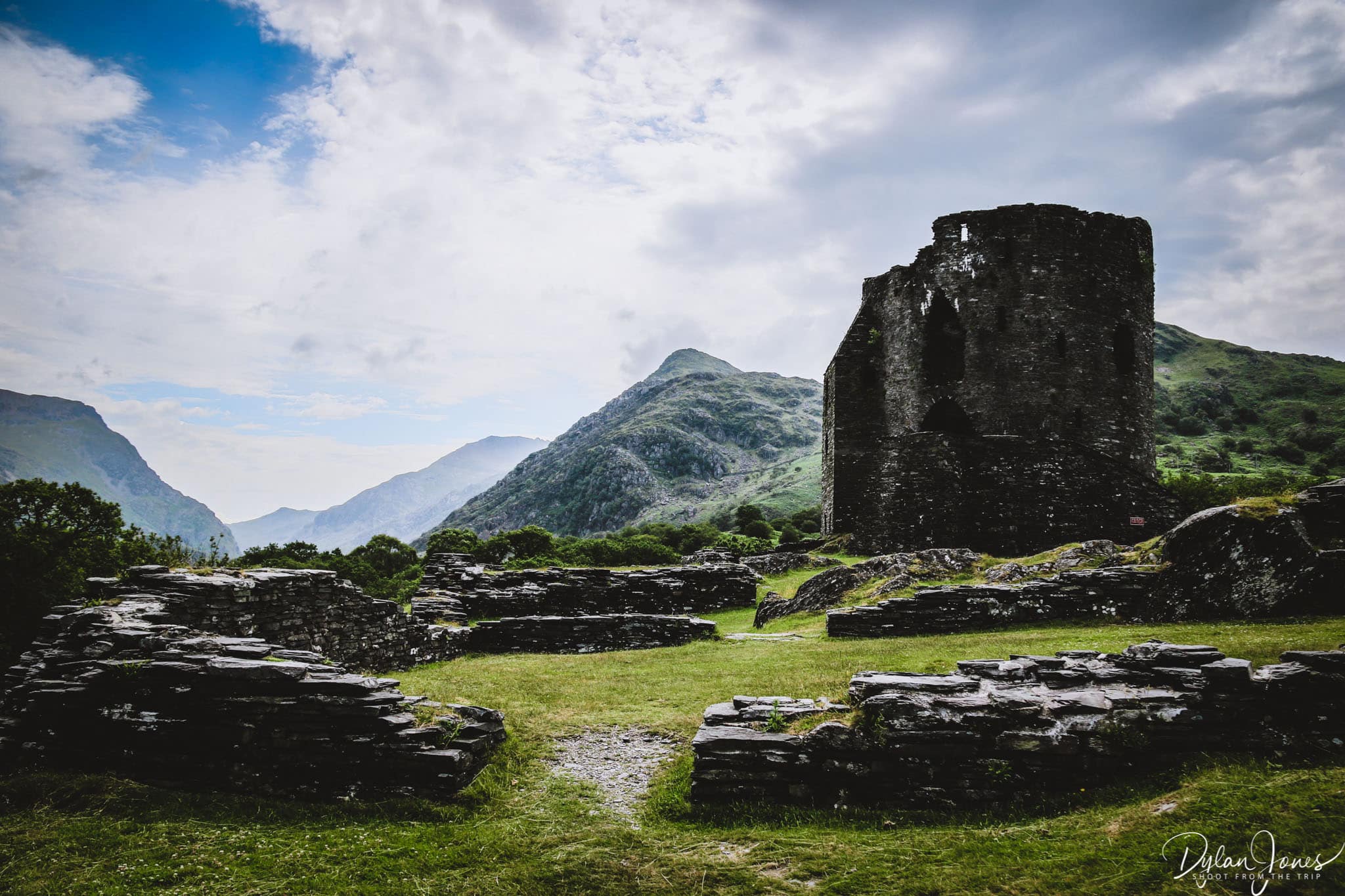
On the outskirts of the mountain town of Llanberis, Dolbadarn Castle is free to enter and can be access via a public footpath opposite one of the Padarn Country Park car parks (clearly signposted for the castle). The footpath leads across a stream and through a beautiful woodland, before reaching the castle. Exploring the grounds of Dolbadarn Castle provides wonderful views of the surrounding mountain landscape and both Llyn Padarn and Llyn Peris. Across the lakes, the towering slate walls of the Dinorwic Slate Quarry are in view, another fabulous area to explore locally.
Dolbadarn Castle is open to the public year round and operated by CADW.
Postcode: LL55 4UB
Dolbadarn Castle is free to enter, no tickets required.
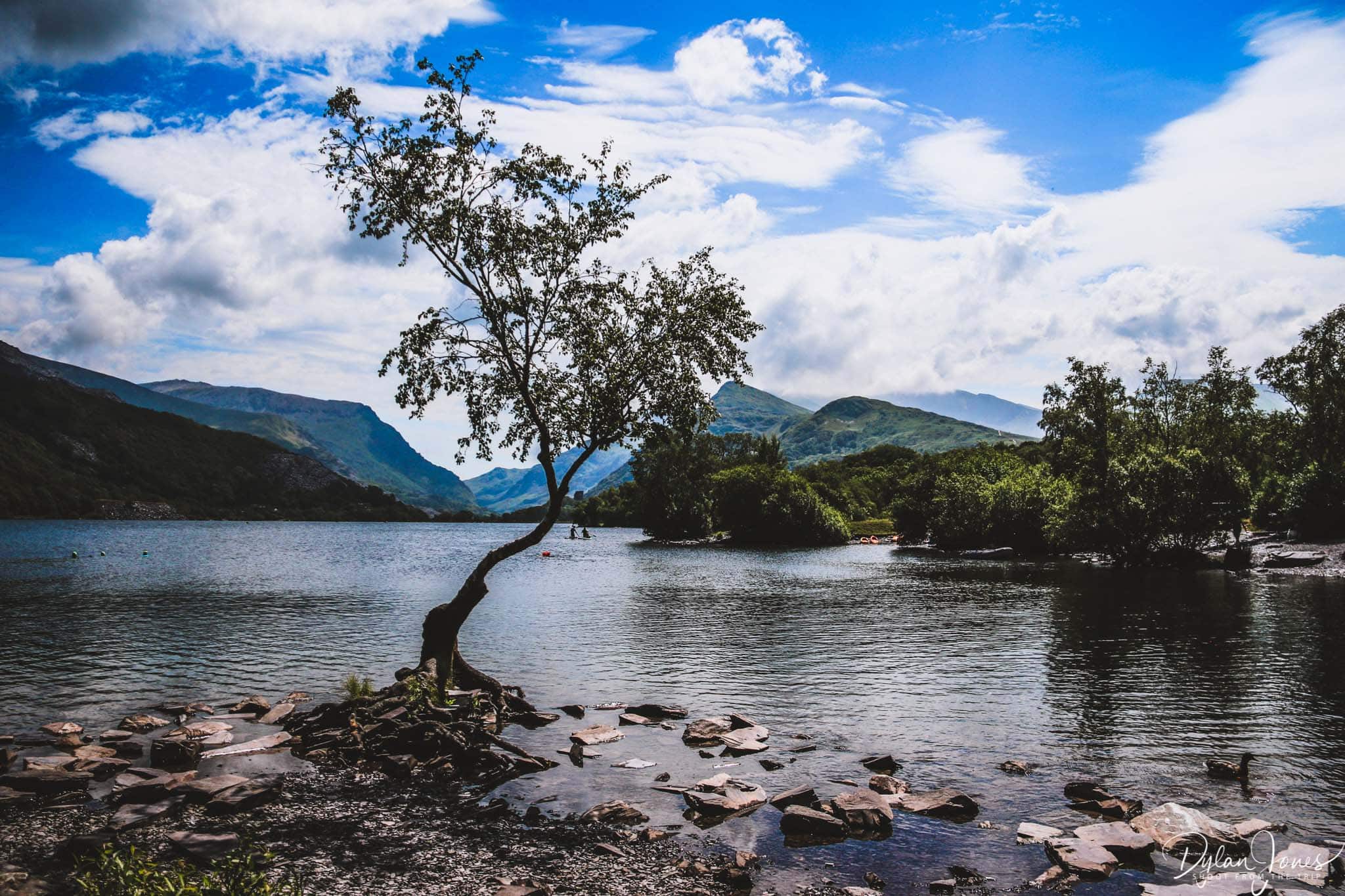
Spending more time in Llanberis? The Snowdon Mountain Railway station is a short distance from Dolbadarn Castle. Take a walk along the shores of Llyn Padarn to find the famous Lone Tree – a favourite spot for photographers to the area. To experience the industrial history of the area, head to the Dinorwic Slate Quarry which has recently been awarded UNESCO World Heritage Status.
HEAD ON AN EPIC JOURNEY WITH A WALK TO THE DINORWIC SLATE QUARRY FROM LLANBERIS
A castle that’s not actually a medieval castle

Finally, let’s take a look at a castle that not actually a medieval castle at all. GWRYCH CASTLE, located on a hillside near the town of Abergele, looks like an imposing medieval fortress left to ruin with it’s impressive layout, towers and turrets. Surprisingly, Gwrych Castle was constructed between 1812 and 1822, more than 500 years after the castles of North Wales detailed above.
More recently, the castle has become famed as being the new location for ITV’s ‘I’m A Celebrity, Get Me Out of Here’ show during the pandemic years. Following the show’s popularity in 2020, many of the set pieces were left at the castle to be seen and experienced by day visitors. The castle will reopen in 2022, and thanks to the additional funding created by the show, further renovation works are able to be funded to restore the building to its former glory.

Gwrych Castle is open to the public and operated by GWRYCH CASTLE PRESERVATION TRUST. Check website for seasonal opening dates.
Address: Gwrych Castle, Llanddulas, Abergele, Conwy, LL22 8ET
Book tickets here on the GWRYCH CASTLE WEBSITE
TAKE A LOOK AT MY EXPERIENCE OF EXPLORING THE RUINS OF GWRYCH CASTLE IN NORTH WALES
RELATED NORTH WALES CONTENT
Looking to stay in Conwy: NUMBER 18 – THE MOST INSTAGRAMMABLE ACCOMMODATION IN CONWY
Why not enjoy a magical coastal walk in Anglesey: LLANDDWYN ISLAND: A WALK FROM NEWBOROUGH BEACH

SOCIAL
If you enjoyed this article and found it useful, Pin one of the images below to Pinterest.
For regular photo updates on my travels, follow my account on Instagram.
Scroll down (on mobile) to subscribe and get new post alerts directly to your inbox.