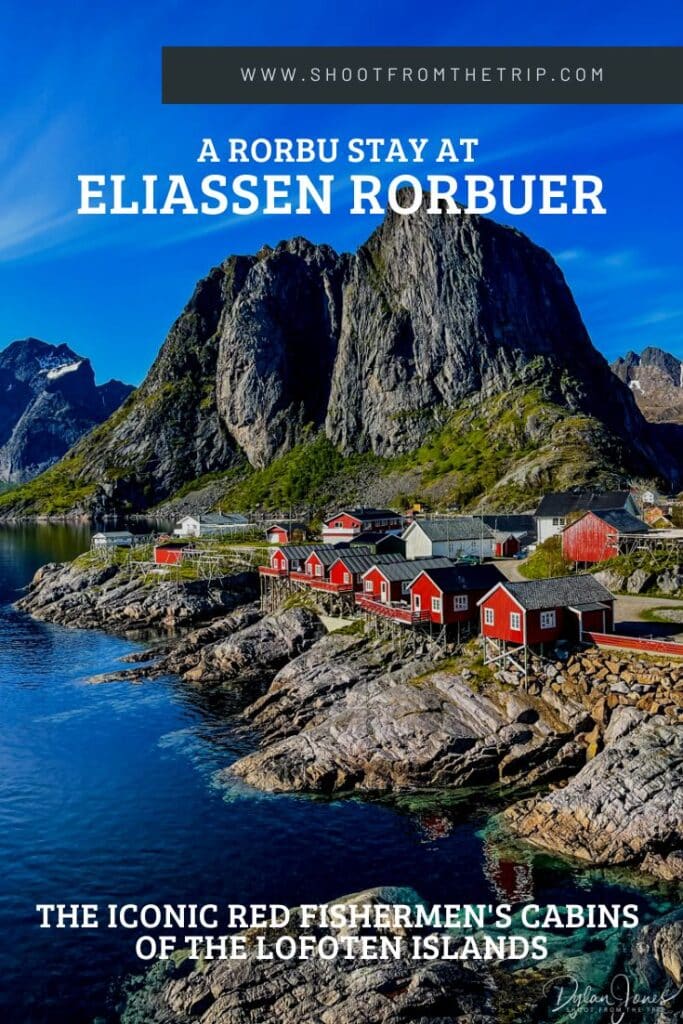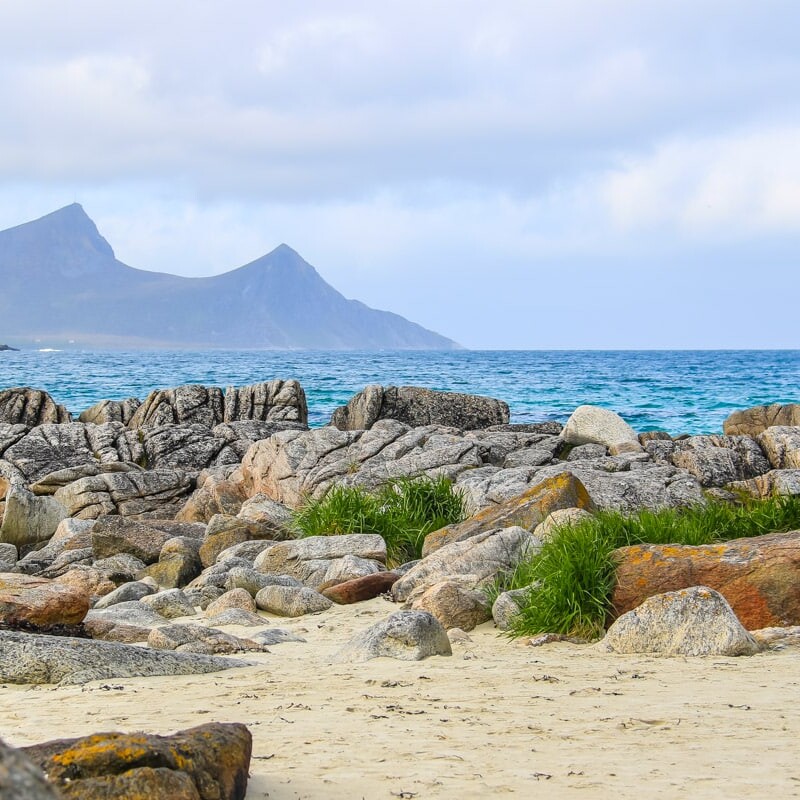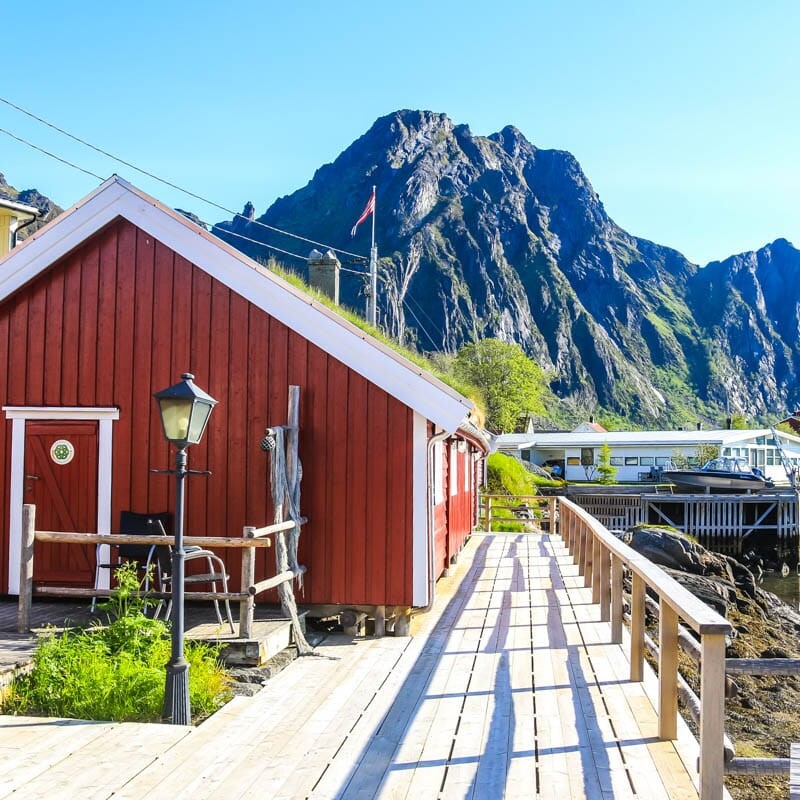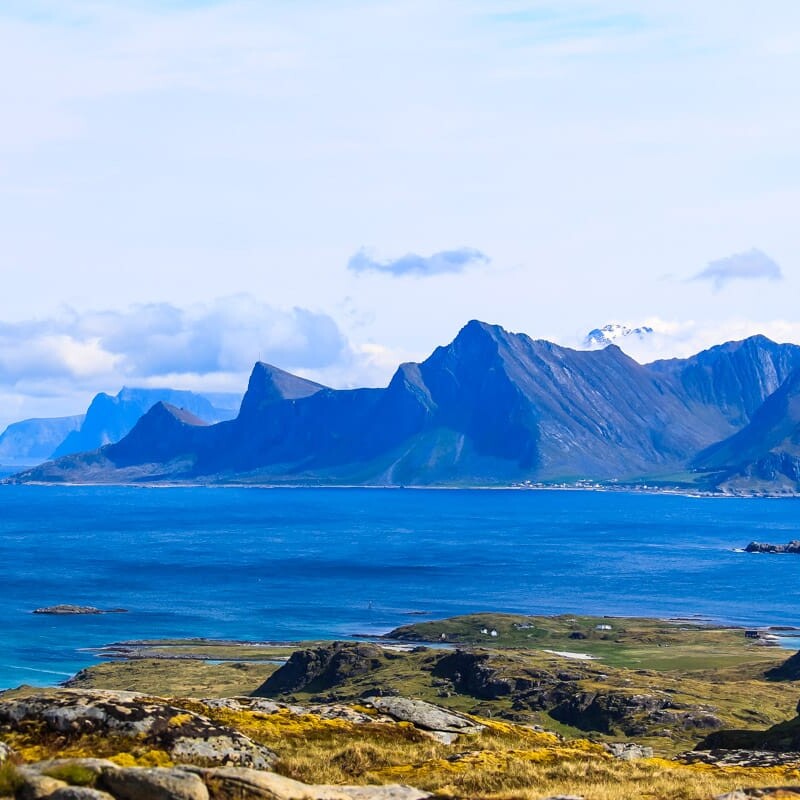

Heading further south into the Lofoten archipelago of Norway, the landscape becomes more dramatic and the scenery more beautiful. Steep granite mountains tower into the skies, waterfalls cascading down their cliff faces. Crossing bridges from island to island, glimpses of bright white sands and crystal clear turquoise water appear, seemingly more at home in the Caribbean than at 68 degrees north and 150 miles north of the Arctic Circle. The wide open landscapes are dotted with tiny fishing villages which appear on the water side. Tiny red cabins sit above the water on wooden platforms, creating a picture perfect scene. We’ve come to stay at Eliassen Rorbuer in a rorbu – the iconic red fishermen’s cabins of the Lofoten Islands.

You might not have heard of the Lofoten Islands, but if you’ve spent any time scrolling through travel images on social media, they are likely to be familiar. Located on the western coast of Northern Norway, the Lofoten archipelago is a group of islands separated from the mainland by the Vestfjord body of water. Lofoten is made is up of seven main islands, with hundreds of smaller islands dotted in between, some inhabited and some not. The islands are connected by one main road, the E10, travelling a distance of 270km from Hinnøya in the east to Moskenesøya in the south west. With Moskenesøya having some of the most dramatic landscapes in Lofoten, Eliassen Rorbuer, located towards to the south of the island is a great base from which to explore.

Making bookings through some links on this page may earn me a small commission and assist in the upkeep of this website at no extra cost to you, which is very much appreciated.
STAYING IN A RORBU CABIN AT ELIASSEN RORBUER
Lofoten’s fishing history dates back over a thousand years, where fishermen have fished and processed stockfish to export to Europe and around the world. Stockfish – unsalted Norwegian cod which is split lengthwise, but joined at the tail, is rinsed with water and hung to dry outside on wooden racks for 1 to 2 months. These fish racks can be found along the shores of Lofoten, in and around fishing villages and coastal areas.

On the small island of Hamnøy, residential and utliity buildings were originally constructed in the 1870’s for the fishing industry. With the introduction of a pier in the 1950’s, a sheltered harbour was created. The fishermen’s cabins on the island, known as rorbu, were used by fishermen from all over Norway for the world’s biggest annual cod fishing event, with the oldest cabins dating back to 1890. These cabins, all now renovated to suit the tourist market, retain the decor and charm as a reminder of their original use. Eliassen Rorbuer, located on Hamnøy, features a number of cabins of various sizes and styles, alongside a restaurant and bakery, all surrounded by jaw dropping scenery.

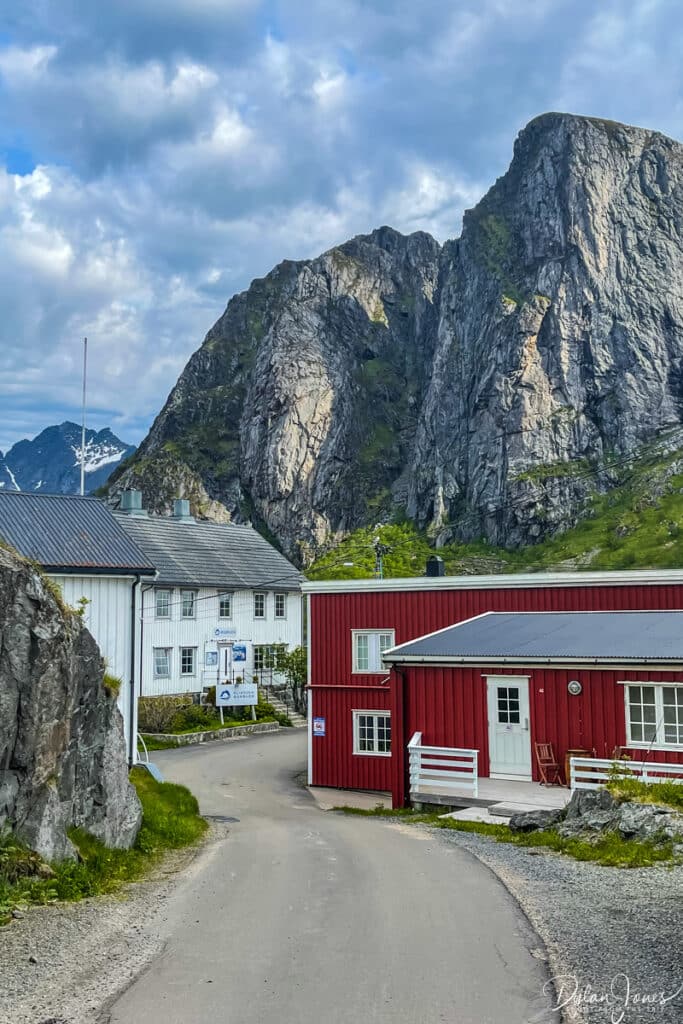
THE ICONIC RED FISHERMEN’S CABINS OF THE LOFOTEN ISLANDS
The rorbu of ELIASSEN RORBUER are some of the most photographed in Norway, thanks to their stunning location and spectacular mountain backdrop. These iconic red fishermen’s cottages sit above the rocky outcrops jutting out into the Reinefjorden waters, beneath towering cliffs of granite and volcanic rock. The dramatic jagged peaks, known as the Lofoten Wall, are awe inspiring and imposing, still showing remnants of the winter snow in June. During winter, the Northern Lights can be seeing dancing up above, whereby the summer months show off the midnight sun for a period of weeks where the sun never sets. With often dramatic weather changes from day to day in Lofoten, this ever changing view never gets old.

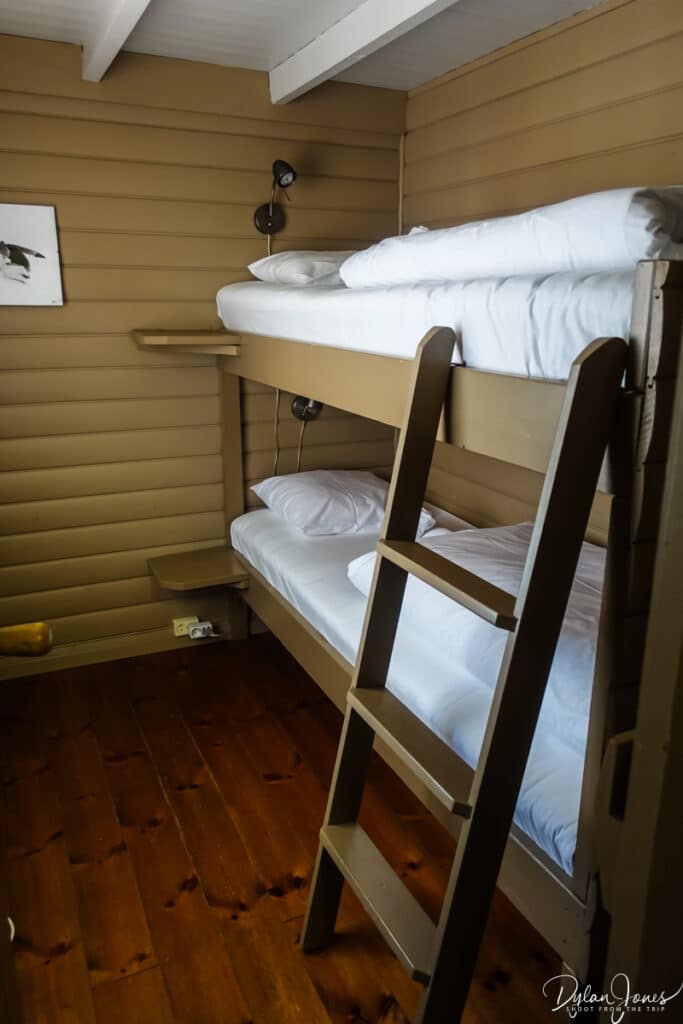
With 47 accommodations ranging between studio, one and two bedroom cabins or apartments, there are a choice of superior, standard or traditional cabins. Wanting as authentic an experience as possible we opted for the Traditional Waterfront Two Bedroom Cottage. With mountain views directly out over the fjord, the setting was perfect. Although there were only two of us, we opted for a two bedroom accommodation to allow for more space. The one bedroom traditional cottages ranged in size and layout with some having only bunk beds. Our two bedroom cottage included a single bed and set of bunks in one room, with a second set of bunks in the other. The Superior cottages, while seemingly having more bedroom space and double beds, were more contemporary in their styling, which wasn’t what I was looking for.
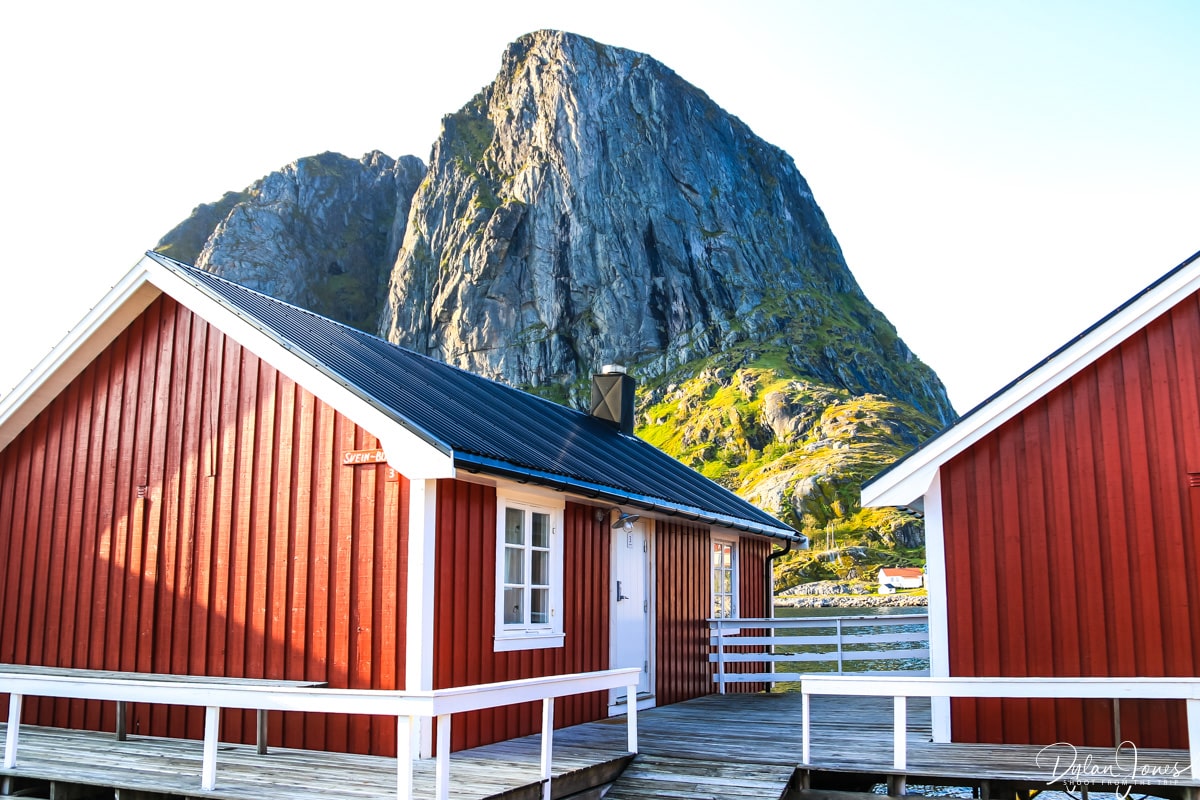
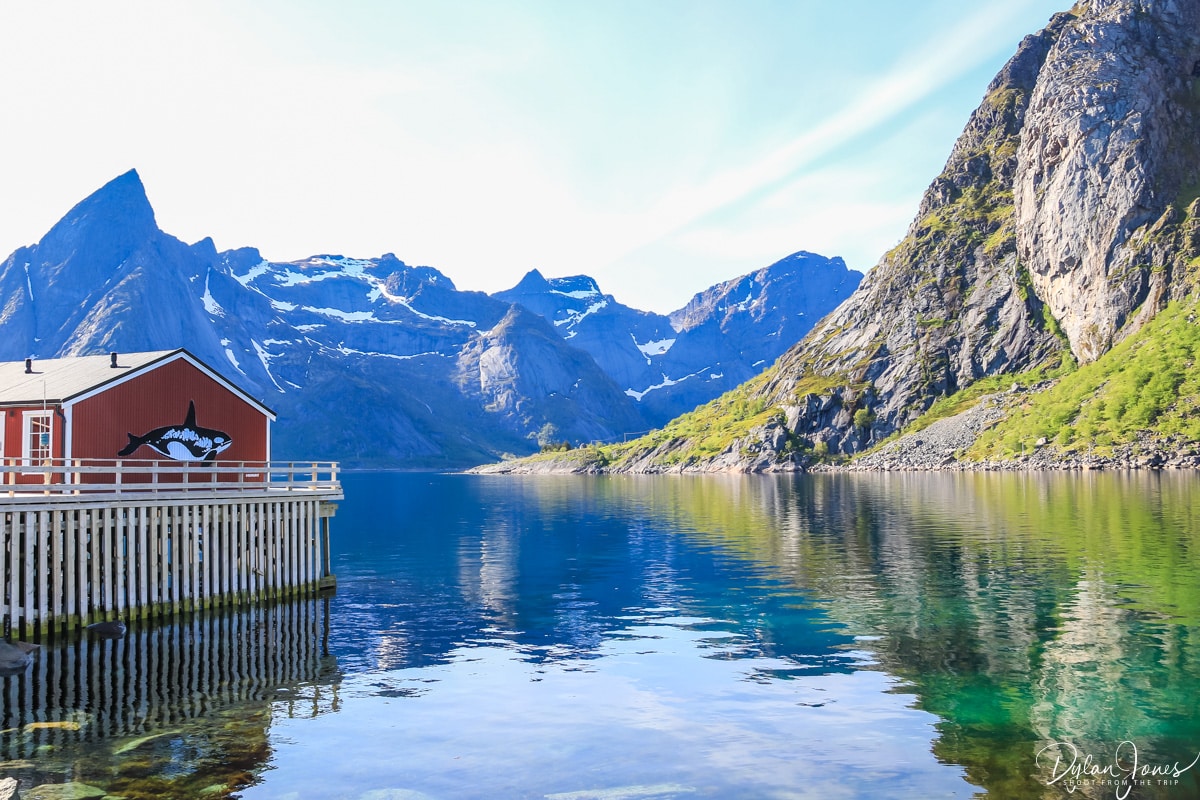
With parking directly outside and ramp access onto a wooden deck, our bright red wooden panelled cabin looked fabulous in the summer sunshine on a surprisingly warm day. Stepping in, we were greeted by a cosy and rustic interior of wooden flooring and wall panelling throughout. With two bedrooms to the left hand side of the hallway, a shower room directly ahead, a door to the right led into a lovely spacious open plan living area with windows to three aspects. With the windows open, the sound of the sea gently lapping on the rocks below was all we could hear. Bliss.


With an L shaped kitchenette to one corner of the space, there was an oven with hob, kettle, microwave and coffee machine available. A dining table sat opposite with views directly out of two windows over the crystal clear Reinefjorden, with the pointed peak of Olstinden as a backdrop. With an L shaped sofa and side chair completing the space, this traditional cabin was the perfect base for a few days. Whilst we didn’t cook in the cabin, it was ideal for guests wanting to self cater, with access to a small Co-op supermarket a couple of miles away in Reine, from where we picked up some snacks and local beers.


A LOOK AROUND ELIASSEN RORBUER
With so much to explore in Moskenesøya and the surrounding islands, Eliassen Rorbuer is the perfect place to head back to and relax. Whether it’s winter evenings looking out for the Aurora Borealis, or mild summer evenings relaxing out on the decks, the hotel complex is a great place to stroll around, taking in the views from different aspects. The iconic picture postcard Lofoten viewpoint from the Hamnøy Bridge looking back across to the island is a must do, especially in different weather conditions. The mood and atmosphere changes so dramatically and quickly. From dark clouds, to torrential rain, to blue skies and bright sunshine, you can experience four seasons in one hour here. There are also a number of guest facilities on site.


Throwing an Italian twist on local fare, the onsite GADUS restaurant is a must visit during your stay. Located within a historic building, across two floors, the restaurant serves breakfast and dinner in a cosy and rustic setting. With a table by the window looking out at the incredible views, the menu had a heavy emphasis on fish including a variety of stockfish dishes and a catch of the day. We dined at Gadus on both evenings of our stay, the food was delicious along with fantastic and friendly service. The restaurant has a small bar area tucked away on the first floor and a large outdoor decked area with plenty of seating.


Exploring Eliassen Rorbuer, you’ll also find a couple of jetties around the harbour, one of which is the starting point of many outdoor adventure activities organised by Pukka Travels, as well as a sauna. Wandering around near the harbour area in the Eliassen Village Square, the large dockside utility buildings can be explored as a museum showing some of the fishing history of Hamnøy. Next door, the Lofoten Bakeri, open mornings only, is a great place to stop and grab a speciality coffee and some fabulous Scandinavian pastries (which are a big thing around here!). There’s also a small gallery with prints from local artists.


Summer evenings offer some amazing light conditions on sunny days, and there are a network of pathways and decks around the rorbu, with benches and loungers dotted around. These provided the perfect spots to sit and take in the incredible views of the surrounding mountains in this peaceful location.


PLACES TO EXPLORE NEAR ELIASSEN RORBUER
Unless your visiting in the peak of summer, where the roads can be quite busy, exploring the Lofoten Islands by car is a joy. The majority of roads tend to hug the coastline of the islands, with very few mountain roads to navigate. Eliassen Rorbuer has a number of great spots nearby to visit, all within a half hours drive.
LOOKING FOR MORE SCANDINAVIAN ADVENTURES – TAKE A LOOK AT MY LAPLAND WINTER ITINERARY
Visit Å, the southernmost village in Lofoten
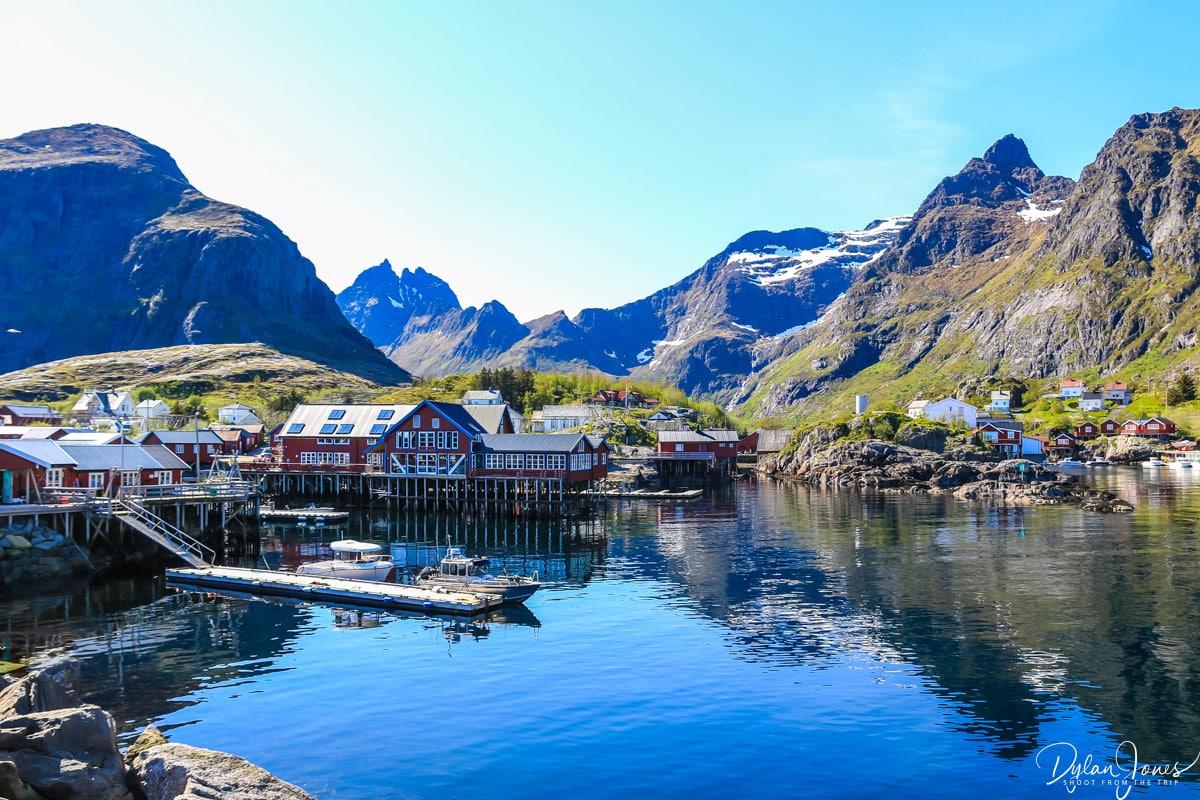
The first day of our road trip in Lofoten involved driving to the southernmost point of the E10 highway, to the picturesque village of Å. A 25 minute drive south of Eliassen Rorbuer, this pretty little fishing village is packed full of red rorbu sitting on the waters edge. Wooden boardwalks cross water inlets from the sea offering wonderful views from all directions.


A popular tourist honeypot, there’s a large car park on the edge of the village which keeps the centre free of traffic. A short walk down to the harbour provides access to attractions such at the Norwegian Fishing Museum which is beautifully preserved across a number of historic buildings. With rorbu, hotels, cafes and restaurants dotted around, there’s plenty to keep visitors occupied in between taking in the views.

Explore the fishing village of Reine
The village of Reine is only a short drive from Eliassen Roburer, and a great spot to visit while in the area. Located on an island directly off the E10, this authentic fishing village is the picture perfect Lofoten spot. A working harbour dotted with rorbu is steps away from the central square, with shops and cafes, including Bringen Kaffebar – a stylish coffee shop with great coffee and cakes. It’s a popular spot for hikers to gather after one of the nearby hikes.

Walking through Reine along the water’s edge, you’ll find yourself alongside and under the wooden fish racks, packed full of drying fish. Whilst you’d expect a strong fishy aroma when you’re in the vicinity, it’s not particularly strong or offensive, and something you get used to fairly quickly when visiting Lofoten.


Whilst the whole village is photogenic, for a fantastic photo spot not to be missed, head to the bridge directly off the E10 at the turn off to Reine. The view from this location is breathtaking. The tiny islands of the foreground sit in front of a panorama of the incredible jagged mountain peaks acting as the most dramatic backdrop.

Hike Reinebringen for epic views
There’s one must do hike while in Reine, and if your legs can take it, you’ll be rewarded with epic and unrivalled views. The Reinebringen hike is a short 1km hike up a continuous set of over 1500 stone steps, reaching an elevation of 470m. Accessed from one of the two main car parks in Reine (one in the harbour, and the other just off the E10), a short walk of between 0.3 and 0.8km follows a pathway around the headland beyond the road tunnel to the starting point at the base of the steps. From here it’s onwards and upwards. With very few flat sections, whilst the climb up the steps is not technically challenging, it’s not easy. The stone steps vary in height, with some steeper sections than others. As the switchback trail climbs up Reinebringen, the views looking back down show the distance and height travelled, while providing fabulous views of the coastline and surrounding mountain scenery.


There are some stopping points along the way, with stone benches built into the mountainside along the trail, allowing the opportunity to take a breather and grab a drink or energy snack in a safe space. The day of my climb saw some inclement weather with rain and gusty winds. In hindsight, had I known how gusty it would be, I probably wouldn’t have chosen to do the hike, but it was my only opportunity of the trip. The benefits of course, are less people on the trail, which can get very crowded on dry summer days. Nearing the first viewpoint at the top of the steps, feeling weary, I had to take some shelter from the larger gusts of wind, but when they died down I reached the viewpoint and took my first glance at this epic scene. The panoramic views of the small islands and villages of Reine, Sakrisøy, and Hamnøy below, along with the endless backdrop of jagged peaks was magical.

I parked at the main parking lot in Reine Harbour – about a 0.8km walk to the hike start point. In total, the hike took about two hours there and back, however I didn’t spent too much time at the summit due to the weather.
Stop off in Sakrisøy for lunch
In contrast to the dazzling red rorbu seen in most locations around Lofoten, the tiny island of Sakrisøy located between Hamnøy and Reine features a collection of yellow rorbu. To one side of the E10, the accommodation buildings are set amongst the fish racks and there is also an onsite restaurant and antique store.
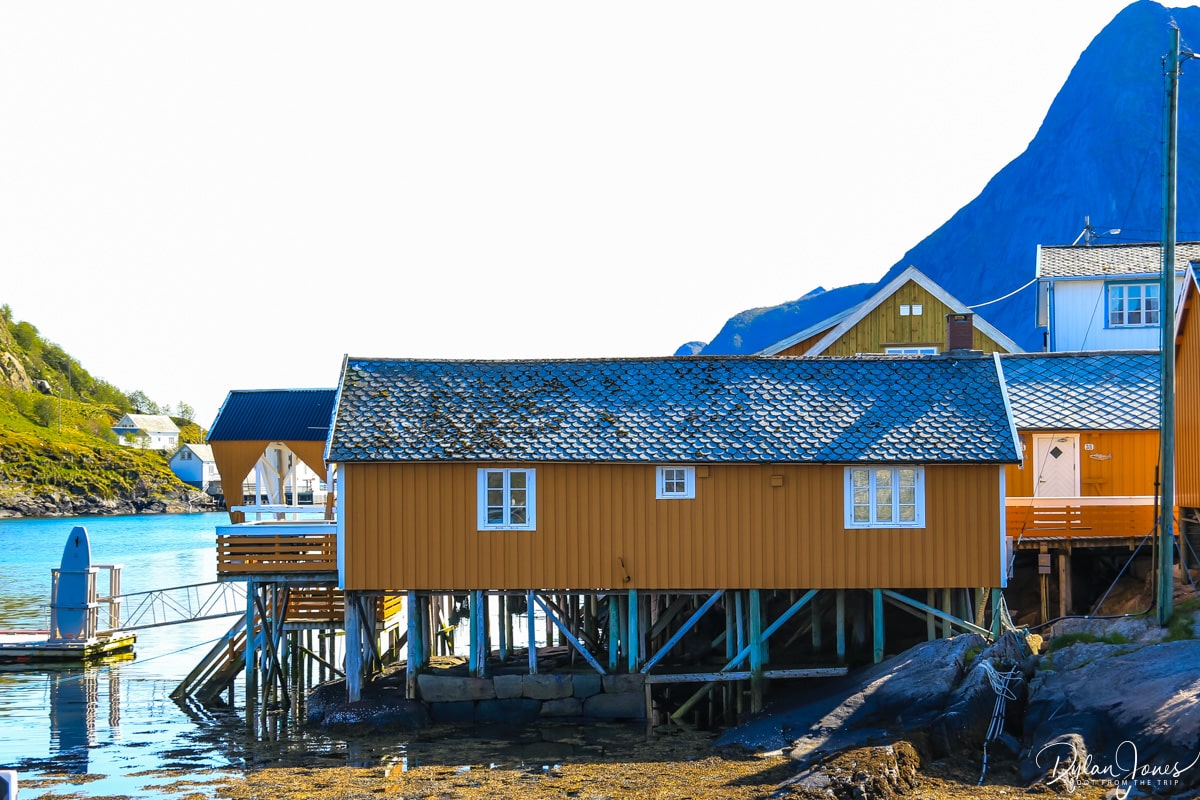

The opposite side of the road is home to one of the most iconic little cabins in Lofoten. This picturesque lone yellow cabin sits at the waterside with the backdrop of the jagged Olstinden. It’s a popular stopping point for Instagrammers so be sure to time it right to get that perfect shot, before heading next door to Anita’s Sjømat (ANITA’S SEAFOOD). This wonderful deli and cafe has a fantastic fish based lunch menu with an amazing fish soup that shouldn’t be missed. The adjacent deli is packed full of local produce including the best local Sakrisøy dried stockfish.


HOW TO GET TO THE LOFOTEN ISLANDS FROM THE UK
There are a number of options of how to get to the Lofoten Islands from the UK, including by plane or by ferry, with a number of ports and airports dotted around the islands. With no direct flights to the Lofoten Islands from UK airports, finding an option with connecting flights (in Oslo) on the same day, in both directions was a little challenging. This resulted in booking outbound and return flights with different airlines. We flew outbound with SAS from Manchester Airport, and returned with Norwegian including same day connections and good flight times. We flew into Harstad Narvik airport in Evenes, located to very eastern end of the Lofoten Islands and just across onto the mainland. With direct access from the airport to the E10 road, it was ideal.

The best way to get around the Lofoten Islands is by car. With a number of car hire options available at Harstad Narvik airport, pick up from SixT was quick and easy process. From the airport, to the village of Å is 295km and takes about four and a half hours without stopping. We split of our trip south across two days and worked our way back through the islands for the remainder of the week. Ferries are also an option, when visiting the Lofoten Islands. The islands are a popular stopping point for cruise ships sailing the Norwegian coast, and there are a number of ports throughout Lofoten which see the daily stops of the Hurtigruten cruise ships on the Original Coastal Express route.
SOCIALS
If you enjoyed this article and found it useful please leave a comment in the box below or Pin one of the images below to PINTEREST.
For regular photo updates on my travels, follow my account on INSTAGRAM.
Scroll down (on mobile) to subscribe and get new post alerts directly to your inbox. If you’re on desktop, head to the right hand sidebar and pop in your email address.